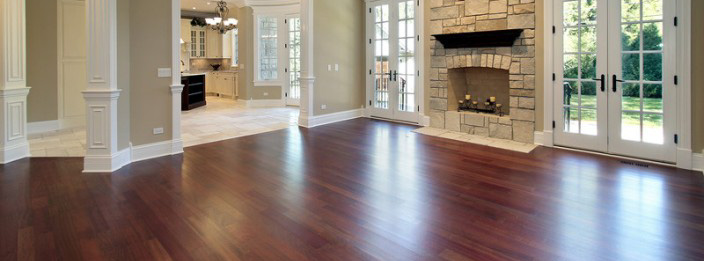

National Floors provides professional hardwood floor refinishing, sanding, staining, repair, and restoration in Hayward, California. Water damage, plumbing leaks, appliance problems, pets, heavy traffic, and ordinary household accidents can sometimes leave one portion of a hardwood floor looking considerably worse than everything around it.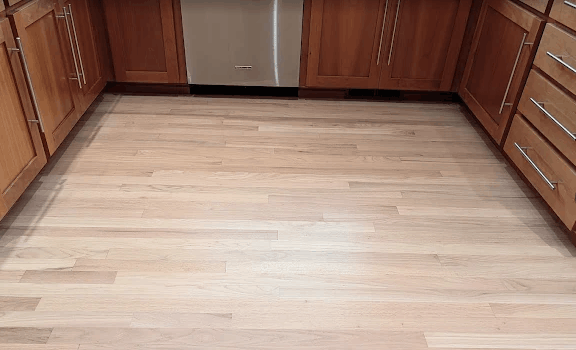
Damage in one area does not necessarily mean the entire hardwood floor needs to be replaced. Before recommending replacement, National Floors evaluates how far the damage extends, whether the surrounding hardwood remains sound, and whether the affected area can be repaired before the floor is refinished.
Hardwood Floor Refinishing in Hayward
When hardwood becomes scratched, dull, discolored, or worn through its protective coating, professional refinishing can restore the existing surface. Sanding removes the old finish and a controlled amount of wood, preparing the floor for a new protective finish or stain color.
- Dust-controlled sanding removes old coatings, surface scratches, discoloration, and traffic wear.
- Hardwood floor repairs can address damaged or missing boards before refinishing.
- Custom staining allows homeowners to preserve a traditional appearance or change the color of the existing hardwood.
- Professional-grade finishes protect the restored surface and are available in different sheen levels.
- Pre-sanding assessment helps determine whether another complete refinishing is appropriate.
Learn more about our hardwood floor refinishing and restoration services.
Find out more about our 2 Year Warranty
Water Damage Does Not Always Mean Replacing the Entire Floor
Water can affect hardwood in very different ways. A plumbing leak, appliance problem, overflowing fixture, or other localized incident may damage only a small portion of an otherwise sound hardwood floor.
The important question is not simply whether the floor got wet. It is what happened to the wood after the moisture entered it.
Moisture can cause staining, cupping, swelling, movement, separation, or permanent distortion. The severity depends on how much moisture was involved, how long the flooring remained wet, and how the individual boards responded.
In some situations, only the affected boards need to be replaced while the surrounding hardwood remains perfectly usable.
The Floor Must Be Dry and Stable Before We Repair It
Replacing damaged hardwood before the moisture problem has been corrected can create another problem instead of solving the first one.
The source of the water must be addressed, and the affected area needs sufficient time to dry and stabilize before permanent flooring repairs are considered. Hardwood that is still reacting to excess moisture can continue changing dimension after repair work has been completed.
Once conditions are appropriate, we can evaluate which boards have recovered, which remain permanently damaged, and what portion of the floor actually requires repair.
We repair the flooring after the cause of the damage has been addressed—not while the floor is still responding to it.
Water Staining and Physical Damage Are Not the Same Thing
A dark water stain and a physically distorted board present two different restoration problems.
Some discoloration is relatively close to the surface and may improve considerably during normal sanding. Other stains penetrate much farther into the wood and cannot safely be sanded away completely.
Cupped, swollen, split, or permanently distorted boards may require a different solution. If individual boards are no longer suitable for restoration, replacing those boards can make more sense than aggressively sanding good hardwood around them.
The objective is to correct the damaged area while preserving as much sound flooring as practical.
Repairing a Localized Section of Hardwood
When only part of a floor has been permanently damaged, individual boards or sections can sometimes be removed and replaced.
A professional hardwood repair involves more than finding boards of approximately the same color. Species, width, thickness, milling, grain, and installation direction all influence how the replacement material integrates with the original flooring.
New wood may also look different from hardwood that has aged in the home for many years. When appropriate, sanding and refinishing the connected flooring together gives the repaired area a better opportunity to blend with the surrounding floor.
Learn more about our hardwood floor repair services.

Why We Do Not Simply Sand Deeper Into a Water Stain
One of the risks in restoring a stained hardwood floor is assuming that continued sanding will eventually reach clean wood.
Sometimes it will. Sometimes it will not.
Every additional sanding pass removes usable hardwood from the surrounding floor as well as from the stained area. A stain that has penetrated deeply can require removing an unreasonable amount of wood before it disappears.
At that point, replacing several damaged boards may produce a better repair than unnecessarily thinning a much larger section of good flooring.
The goal is not to sand until the stain disappears at any cost. The goal is to protect the integrity of the floor while producing the best practical result.
Can Cupped Hardwood Be Saved?
Cupping occurs when moisture conditions cause the edges of a hardwood board to sit higher than its center. The appearance can be alarming, but sanding the floor immediately is not necessarily the correct response.
If the hardwood is still holding excess moisture, its shape may continue changing as it dries. Sanding a floor while it is still distorted can remove wood from areas that may later move again.
For that reason, the moisture source and stability of the flooring need to be considered before deciding whether sanding, board replacement, or another repair is appropriate.
Some affected floors can be restored after conditions stabilize. Others suffer permanent damage requiring localized replacement. The condition of the actual flooring determines the recommendation.
Changing the Color During Refinishing
If the repaired floor is a good candidate for complete refinishing, the project also creates an opportunity to change its appearance.
Oak accepts a broad range of stain colors, while other hardwood species can respond differently. Grain variation, replacement boards, sunlight exposure, previous finishes, and the natural color of the wood can all influence the final appearance.
We prefer to evaluate the actual flooring and discuss realistic color options before making a recommendation.
Learn more about our hardwood floor staining and color-change services.
Repair and Refinish or Replace?
Localized damage and complete floor failure are two very different things.
If the majority of the hardwood remains structurally sound, repairing a damaged section and refinishing the connected floor can preserve substantial amounts of usable material.
Replacement becomes the better option when damage is widespread, the flooring is structurally compromised, too little usable wood remains for another sanding, or localized repair would no longer produce a practical result.
We prefer to determine how much flooring actually needs replacement rather than assume that one damaged area condemns the entire floor.
Hardwood Stair Refinishing and Installation
Hardwood stairs can develop concentrated wear, scratches, dents, and finish loss because foot traffic repeatedly contacts the same portion of each tread.
Existing hardwood stairs can often be sanded, stained, and refinished along with adjoining floors. National Floors also provides hardwood stair installation when damaged components need replacement or hardwood is being added to an existing staircase.
Why Hayward Homeowners Choose National Floors
National Floors is a California C-15 licensed flooring contractor, license #903508. Hardwood sanding, staining, refinishing, restoration, and repair make up the majority of our work, and our crews complete more than 100 hardwood floor refinishing projects in a typical year.
Repair and restoration require judgment as well as sanding experience. Water damage in particular requires determining what can be saved, what should be replaced, and when the flooring is ready for permanent repair.
We use professional sanding equipment and professional-grade finish systems. National Floors requires no labor deposit, and our one-project-at-a-time approach means that once your project begins, our focus remains on completing it.
Free Hardwood Floor Refinishing Estimates in Hayward
If your Hayward hardwood floor has water stains, cupping, damaged boards, scratches, or other localized problems, don't assume the entire floor needs to be replaced.
National Floors provides free in-home estimates. We can inspect the flooring, evaluate the damaged area, determine whether repairs are practical, and explain whether refinishing or replacement is the appropriate next step.
Call National Floors at (408) 309-1880 or schedule your Hayward hardwood floor consultation.
Hayward Areas We Serve
Upper B Street, Fairview, Hayward Hills, Southgate, Glen Eden, Mt. Eden, Harder-Tennyson, and surrounding Hayward neighborhoods.
