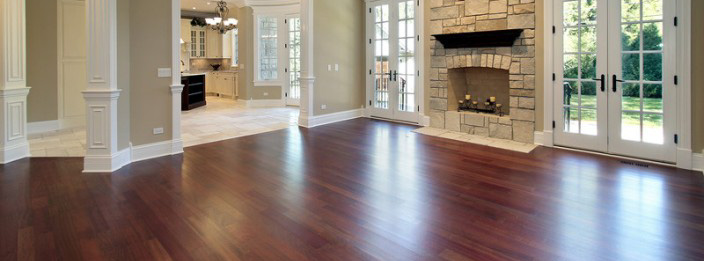

National Floors provides professional hardwood floor refinishing, sanding, staining, repair, and restoration in San Mateo, California. A hardwood floor can look badly worn without actually being worn out.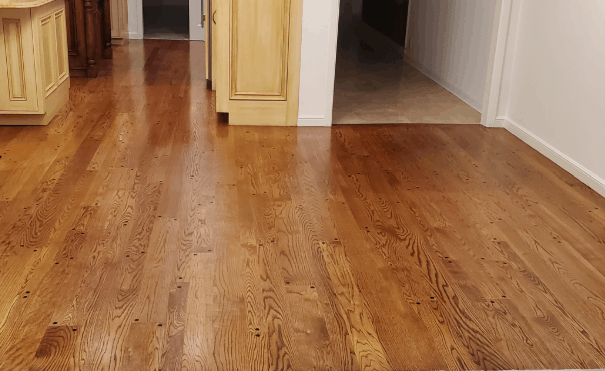
Before recommending refinishing, repair, or replacement, National Floors looks at what is actually happening with the floor. Surface wear, previous sanding, water damage, old repairs, board thickness, flooring construction, and structural problems can produce very different recommendations even when two floors look similar at first glance.
Hardwood Floor Refinishing in San Mateo
Years of traffic gradually wear away the protective coating on hardwood flooring. Scratches become more noticeable, high-traffic areas lose their sheen, and eventually exposed wood can begin absorbing dirt and moisture.
When the flooring remains structurally sound and has enough usable material, professional refinishing can restore the existing hardwood and provide a new protective surface.
- Dust-controlled sanding removes old coatings, surface scratches, discoloration, and normal traffic wear.
- Hardwood floor repairs can address damaged or missing boards before refinishing.
- Custom staining provides the option of preserving a traditional appearance or changing the color of the floor.
- Professional-grade finishes protect the restored hardwood and are available in different sheen levels.
- Pre-sanding assessment helps determine whether another complete refinishing is appropriate.
Learn more about our hardwood floor refinishing and restoration services.
What Is Actually Wrong With the Hardwood Floor?
That is the question we prefer to answer before discussing how the floor should be repaired.
A dull traffic lane may simply indicate worn finish. A dark area may be discoloration near the surface or a stain that penetrates deeply into the wood. A gap may be normal movement or evidence of another condition. Scratches may be confined primarily to the finish, while a deep gouge may extend well into the hardwood.
Those differences matter because the correct solution can range from normal refinishing to individual board repair or, in more serious situations, replacement.
We do not believe that every unattractive hardwood floor should automatically be sanded, and we certainly do not believe every damaged-looking floor needs to be torn out.
Has the Floor Been Refinished Before?
Previous sanding is one of the most important parts of evaluating an existing hardwood floor.
Every complete sanding removes some wood. With traditional tongue-and-groove hardwood, repeated sanding eventually reduces the material above the tongue and fasteners. A floor that has been aggressively sanded in the past may therefore require considerably more caution than one that has never been refinished.
We look for evidence of previous sanding, remaining board thickness, weakened edges, exposed or nearly exposed fasteners, previous repairs, and other conditions before deciding how the floor should be approached.
The age of the house alone does not tell us how much usable hardwood remains.

Surface Damage and Deep Damage Require Different Decisions
Many scratches exist primarily within the finish or upper surface of the hardwood. Normal refinishing can substantially improve this type of wear without requiring unusually aggressive sanding.
Deep gouges, pet stains, prolonged water exposure, and other defects can extend much farther into the wood.
The sanding machine should not be used to chase every deep defect until it disappears. Removing excessive material from an entire floor to eliminate one problem area can unnecessarily shorten the life of otherwise good hardwood.
When damage is localized, repairing or replacing the affected boards may be the better approach.
Water Damage Needs More Than a Cosmetic Evaluation
Water can affect hardwood in several different ways. It may cause staining, swelling, cupping, movement, or permanent distortion.
A dark mark does not tell us by itself how serious the damage is. Some discoloration may improve during normal sanding, while deeper staining may remain below the amount of wood that should safely be removed.
Physical movement of the boards is a different issue from discoloration and needs to be evaluated accordingly.
The moisture source should be corrected and the flooring sufficiently dry and stable before restoration work proceeds. Refinishing the surface does not correct an active moisture problem.
Old Repairs Can Affect a New Refinishing Project
Existing hardwood sometimes contains repairs that are easy to overlook until the old finish is removed.
Replacement boards may be a slightly different species, grain, age, or milling. Previous patches may absorb stain differently from surrounding hardwood. Areas added during remodeling may also react differently once the entire floor is sanded.
Recognizing those conditions before the final stain and finish are applied helps establish realistic expectations for the completed floor.
Repairs and Additions Should Be Addressed Before Sanding
Removed walls, changed closets, old floor vents, plumbing work, water damage, and previous remodeling can leave missing or damaged hardwood within an otherwise usable floor.
When compatible material is available, these areas can sometimes be repaired before the larger refinishing project begins.
Matching involves more than board color. Species, width, thickness, milling, grain, installation direction, and age all influence how replacement material integrates with the existing floor.
When conditions permit, repairing the hardwood first and then sanding and finishing connected areas together can create a more consistent appearance.
Learn more about our hardwood floor repair services.
Solid or Engineered Hardwood?
The construction of the flooring also affects what can safely be done.
Solid hardwood is wood throughout the thickness of the board and can often be refinished multiple times when sufficient material remains.
Engineered hardwood has a real hardwood surface over a layered core. The thickness of that wear layer varies substantially between products.
Some engineered hardwood can be professionally refinished. Other products contain too little usable hardwood for conventional sanding.
We identify the flooring and evaluate the available material rather than assuming that every real-wood surface should be treated the same way.
Changing the Color of Existing Hardwood
If the floor is a good refinishing candidate, keeping the hardwood does not mean keeping its existing color.
Oak accepts a broad range of stain colors and can often be taken from a traditional golden appearance to lighter, warmer, darker, or differently toned finishes. Other hardwood species respond differently to stain.
Grain, natural wood color, sunlight exposure, old repairs, and replacement boards can all influence the final appearance. We prefer to evaluate the actual flooring before making stain recommendations.
Learn more about our hardwood floor staining and color-change services.
Refinish, Repair, or Replace?
A professional recommendation should depend on the condition of the floor rather than how bad it happens to look on a particular day.
Refinishing may be appropriate when the flooring remains sound and the primary problems are finish wear, scratches, discoloration, or an outdated appearance.
Repair and refinishing may be the better choice when most of the floor remains usable but individual boards or sections are damaged.
Replacement becomes appropriate when damage is extensive, the flooring is structurally compromised, too little usable material remains, or the construction of the floor makes restoration impractical.
National Floors prefers to make that recommendation after seeing the actual hardwood rather than assuming replacement based on age or appearance alone.
Hardwood Flooring in Established San Mateo Neighborhoods
Established San Mateo neighborhoods including San Mateo Park, Baywood, Aragon, and Beresford Park contain homes where hardwood flooring may have already experienced decades of traffic, previous refinishing, repairs, or remodeling.
That history is one reason an inspection can be more useful than simply looking at the surface. Two floors of similar age can have completely different restoration potential depending on what has happened to them over the years.
Hardwood Stair Refinishing and Installation
Hardwood stairs often show concentrated wear before adjoining flooring because traffic repeatedly contacts the same areas of each tread.
Existing hardwood stairs can often be sanded, stained, and refinished to coordinate with the floors. National Floors also provides hardwood stair installation when new components are required.
Why San Mateo Homeowners Choose National Floors
National Floors is a California C-15 licensed flooring contractor, license #903508. Hardwood sanding, staining, refinishing, restoration, and repair make up the majority of our work, and our crews complete more than 100 hardwood floor refinishing projects in a typical year.
Experience matters because the correct recommendation is not always obvious from the surface. Previous sanding, repairs, stains, replacement boards, flooring construction, remaining material, and structural condition all need to be considered before wood is permanently removed.
We use professional sanding equipment and professional-grade finish systems. National Floors requires no labor deposit, and our one-project-at-a-time approach means that once your flooring project begins, our focus remains on completing it.
Free Hardwood Floor Refinishing Estimates in San Mateo
If your San Mateo hardwood floor is scratched, worn, stained, damaged, or simply looks like it may need major work, let us determine what it actually needs before you decide to replace it.
National Floors provides free in-home assessments to evaluate the flooring, previous sanding, repairs, damaged areas, and remaining usable material. We can then discuss whether refinishing, repair, replacement, or a combination makes the most sense.
Call National Floors at (408) 309-1880 or schedule your San Mateo hardwood floor consultation.
San Mateo Areas We Serve
San Mateo Park, Baywood, Aragon, Beresford Park, Hillsdale, Shoreview, Hayward Park, Fiesta Gardens, and surrounding San Mateo neighborhoods.
San Mateo ZIP codes: 94401, 94402, 94403, 94404
