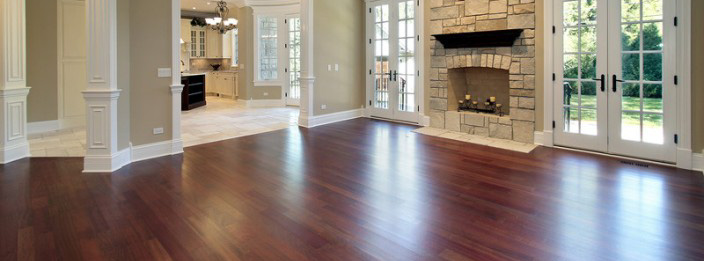

National Floors provides professional hardwood floor refinishing, sanding, staining, repair, and restoration in Redwood City, California. A damaged section of hardwood does not necessarily mean the entire floor needs to be replaced.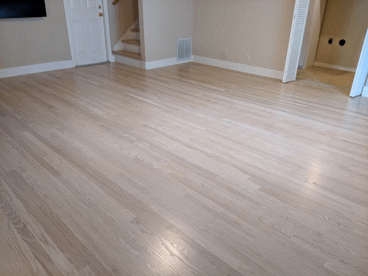
Water damage, pet stains, broken boards, remodeling changes, old floor vents, deep gouges, and missing sections can sometimes be repaired while preserving the good hardwood around them. The important question is not simply whether part of the floor is damaged, but whether that damage is localized and whether the surrounding flooring remains suitable for restoration.
Hardwood Floor Refinishing in Redwood City
Hardwood floors gradually lose their protective finish through normal traffic, furniture movement, sunlight exposure, pets, and years of household use. Once the finish is worn, scratches and discoloration become more noticeable and the wood itself becomes more vulnerable.
When the flooring remains structurally sound, professional refinishing can restore the surface without removing and replacing the entire floor.
- Dust-controlled sanding removes old coatings, surface scratches, and normal traffic wear.
- Hardwood floor repairs can address damaged or missing boards before refinishing.
- Custom staining allows the floor color to be maintained or changed.
- Professional-grade finishes provide a new protective surface in different sheen levels.
- Pre-sanding assessment helps determine whether another complete refinishing is appropriate.
Learn more about our hardwood floor refinishing and restoration services.
Find out more about our 2 Year Warranty
One Damaged Area Does Not Always Mean Replacing the Entire Floor
One of the advantages of traditional hardwood flooring is that individual boards and sections can sometimes be repaired without removing good flooring throughout the rest of the room.
A plumbing leak may affect one area. Pet staining may be concentrated in a particular location. A remodeling project may leave several boards missing. An old floor vent or built-in cabinet may leave an opening after it is removed.
When the surrounding hardwood remains sound, replacing or repairing the affected section can preserve considerably more of the original floor.
Repairing Hardwood Is More Than Filling a Hole
A hardwood floor repair should not be approached like patching a piece of drywall. Simply filling a rectangular opening with new boards can leave a repair that remains obvious even after sanding and finishing.
Where conditions allow, replacement boards can be integrated into the existing flooring pattern so that the repair does not end in one abrupt line.
The appropriate method depends on the location and size of the repair, the direction of the flooring, and the condition of the surrounding boards.
Species, width, thickness, milling, grain, and installation method also matter. A board that is approximately the right color is not necessarily the right material for the repair.
Learn more about our hardwood floor repair services.
Matching New Hardwood to an Existing Floor
New hardwood and existing hardwood rarely look identical before refinishing, even when the correct species is used.
Age, oxidation, sunlight exposure, previous finishes, cleaning products, and normal household use all affect the appearance of wood over time. Newly installed material has not experienced those same conditions.
That does not automatically make the repair unsuccessful. When compatible material is installed correctly, sanding and finishing the connected flooring together can help reduce the visual difference between the old and new wood.
Perfect invisibility cannot always be guaranteed, particularly when an existing floor has aged for many years. The objective is to make the repair integrate naturally with the surrounding hardwood rather than appear as an obvious patch.

Deep Stains Should Not Be Chased With the Sander
Some stains disappear during normal sanding because the discoloration is concentrated near the surface. Others penetrate much deeper into the hardwood.
Trying to eliminate one deep stain by repeatedly sanding the entire floor can remove considerably more good wood than the problem justifies.
If the damaged area is limited, replacing affected boards may be a better restoration decision than sacrificing usable material throughout the surrounding floor.
This is particularly important when the floor has already been refinished in the past and the amount of remaining hardwood needs to be preserved.
Water-Damaged Boards Need to Be Evaluated Individually
Water damage can affect hardwood in different ways. It may cause discoloration, swelling, cupping, movement, or permanent distortion.
Before repairing water-damaged flooring, the moisture source needs to be corrected and the floor must be sufficiently dry and stable. Refinishing the surface does not solve an active moisture problem.
Once conditions are stable, the damaged area can be evaluated separately from the unaffected hardwood. Some boards may remain usable, while others may require replacement before the floor is refinished.
Repairs After Walls, Cabinets and Built-Ins Are Removed
Interior changes can expose areas where hardwood was never installed or where the flooring has been cut around an older feature.
Removing a wall, cabinet, closet, floor vent, fireplace surround, or built-in feature can therefore leave a gap in an otherwise usable floor.
When compatible material is available, hardwood can sometimes be added to these areas and integrated with the existing installation. The repaired and adjoining flooring can then be sanded and finished together.
This can allow homeowners to preserve the majority of their existing hardwood instead of replacing an entire floor because a relatively small section is missing.
Can an Older Redwood City Hardwood Floor Be Sanded Again?
The age of a hardwood floor does not determine by itself whether it can be refinished. What matters is how much usable material remains and how the floor was treated in the past.
Every complete sanding removes wood. A floor that has already been aggressively sanded several times may have limited material remaining above the tongue-and-groove joint.
Before refinishing, we look for evidence of previous sanding, weakened board edges, exposed or nearly exposed fasteners, previous repairs, movement, and remaining board thickness.
The goal is to improve the floor without unnecessarily shortening its remaining service life.
Solid and Engineered Hardwood Require Different Approaches
Some Redwood City homes contain traditional solid hardwood, while remodels and newer installations may use engineered hardwood.
Solid hardwood is wood throughout its thickness and can often be refinished multiple times if sufficient material remains.
Engineered hardwood has a real-wood wear layer over a layered core. Some engineered floors have enough wear layer for professional refinishing, while others do not.
We identify the construction of the floor before recommending sanding. A real-wood surface does not automatically mean that conventional refinishing is safe.
Changing the Color of Existing Hardwood
Repairing and keeping an existing floor does not mean keeping its current color.
Refinishing provides an opportunity to move away from an older golden, orange, red, or dark appearance and select a different stain tone when the wood species is suitable.
Oak accepts a wide range of stain colors. Other species behave differently, and the grain, natural color, sunlight exposure, repairs, and replacement boards can all influence the final appearance.
Learn more about our hardwood floor staining and color-change services.
Repair, Refinish or Replace?
The correct solution depends on how much of the hardwood is actually damaged.
Repair and refinish can make sense when damage is localized and the surrounding flooring remains structurally sound.
Refinishing can restore a floor when the primary problems are worn finish, surface scratches, discoloration, or an outdated appearance.
Replacement becomes appropriate when damage is extensive, the flooring is structurally compromised, too little usable material remains, or restoration would no longer produce a practical result.
We prefer to inspect the floor and determine how much hardwood can reasonably be preserved before recommending that usable flooring be removed.
Hardwood Stair Refinishing and Installation
Hardwood stairs often show concentrated wear because traffic repeatedly contacts the same areas of each tread. They may also need repairs or refinishing to coordinate with adjoining hardwood flooring.
Existing hardwood stairs can often be sanded, stained, and refinished to coordinate with the main floor. National Floors also provides hardwood stair installation when new components are required.
Why Redwood City Homeowners Choose National Floors
National Floors is a California C-15 licensed flooring contractor, license #903508. Hardwood sanding, staining, refinishing, restoration, and repair make up the majority of our work, and our crews complete more than 100 hardwood floor refinishing projects in a typical year.
Repair work requires judgment as well as sanding experience. The objective is to determine what actually needs replacement, what can remain, how new material should be integrated, and how the complete floor should be refinished afterward.
We use professional sanding equipment and professional-grade finish systems. National Floors requires no labor deposit, and our one-project-at-a-time approach means that once your flooring project begins, our attention remains focused on completing it.
Free Hardwood Floor Refinishing Estimates in Redwood City
If your Redwood City hardwood floor has damaged boards, stains, missing sections, remodeling-related openings, or years of surface wear, do not assume the entire floor needs to be replaced.
National Floors can inspect the existing flooring, determine what can be preserved, identify necessary repairs, evaluate whether refinishing is appropriate, and discuss the available options before you decide how to proceed.
Call National Floors at (650) 860-5014 or schedule your Redwood City hardwood floor consultation.
Redwood City Areas We Serve
Mount Carmel, Edgewood Park, Roosevelt, Woodside Plaza, Emerald Hills, Friendly Acres, Redwood Shores, and surrounding Redwood City neighborhoods.
