
Hardwood floors rarely go from good condition to needing major work overnight. They usually give you warning signs first: worn traffic areas, deep scratches, new gaps, dark stains, loose boards or changes in the way the floor feels underfoot.
The important question is not simply what caused the problem. It is what should be done about it before it becomes more expensive to correct?
At National Floors, we have spent years repairing, sanding and refinishing hardwood floors throughout the Bay Area. One of the most important parts of an estimate is determining what can be saved. A damaged area does not necessarily mean the entire floor needs replacement. In many homes, individual repairs can be completed before the existing hardwood is professionally sanded and refinished.
Here are 10 warning signs that tell you it may be time to have your hardwood floors professionally evaluated.
1. Your Hardwood Floors Never Look Clean Anymore
If cleaning no longer brings the floor back to life, the problem may not be dirt. The protective finish may simply be worn out.
This is especially common in hallways, kitchens, entryways and other high-traffic areas. Once the finish wears through, the exposed wood can begin absorbing dirt and moisture. What could have been corrected through sanding and refinishing can eventually become staining or actual wood damage.
National Floors can determine whether the wear is limited to the finish or has reached deeper into the hardwood. Catching it early often gives us more options for restoring the existing floor.
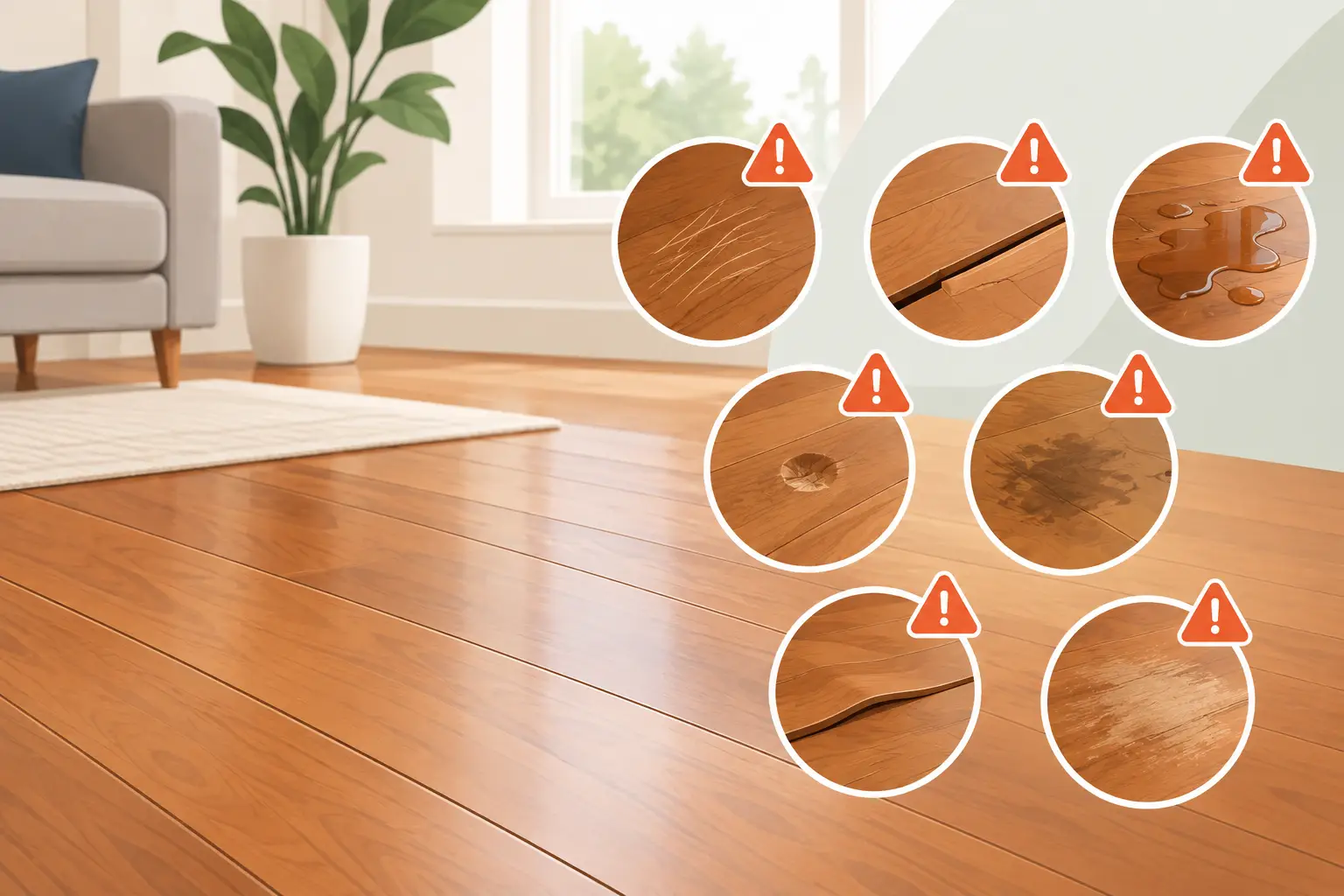
2. Scratches Have Reached the Bare Wood
Minor surface scratches are part of living with hardwood floors. Deep scratches that expose raw wood are different.
Once the protective finish has been penetrated, dirt and moisture can enter the wood itself. A few damaged boards may be repairable, while widespread scratching can make sanding and refinishing the better investment.
This is also where experience matters. Trying to touch up numerous scratches individually can leave a floor looking spotted and inconsistent. Refinishing allows us to restore the floor as a complete surface rather than chasing one damaged area after another.
3. The Boards Are Starting to Cup
When the edges of hardwood boards begin rising higher than their centers, moisture may be affecting the floor.
This is not a situation where we recommend immediately sanding the boards flat. The condition of the wood needs to be evaluated first. Sanding a moisture-affected floor before it is ready can create an entirely different problem later.
National Floors evaluates questionable areas before recommending refinishing. Sometimes the floor needs time to stabilize. Sometimes repairs are necessary first. Knowing when not to sand a floor is just as important as knowing how to sand one.
4. The Middle of the Boards Is Higher Than the Edges
This condition is known as crowning. Like cupping, it can indicate that moisture or an earlier flooring problem has affected the shape of the boards.
From a homeowner's perspective, both conditions may simply look like an uneven floor. From a flooring contractor's perspective, the difference matters because the wrong corrective work can make the condition worse.
Before National Floors recommends sanding, we want to understand what the floor is doing and whether it is stable enough to restore properly.
5. Gaps Between Boards Are Getting Larger
Some seasonal movement is normal with hardwood flooring. New gaps that are unusually large, irregular or continuing to grow deserve a closer look.
Simply filling every visible gap is not always the answer. If the flooring continues to move, filler can crack and the problem returns.
During an estimate, National Floors can evaluate whether the gaps are normal for the floor or whether repairs should be addressed before refinishing. Our goal is not to sell unnecessary work. It is to determine what will produce a lasting result.
6. Boards Are Loose, Squeaking or Moving Underfoot
A squeak by itself does not necessarily mean your floor is failing. A board that noticeably shifts or moves deserves more attention.
National Floors performs hardwood floor repairs in addition to sanding and finishing. When practical, damaged or loose boards can be repaired or replaced before the entire floor is refinished. This allows the repair to become part of the restoration instead of automatically replacing an otherwise serviceable hardwood floor.
For homeowners with older Bay Area hardwood floors, that ability to combine repairs with refinishing can make a significant difference in the final result.
7. Dark or Black Stains Are Appearing
Dark stains often mean moisture has penetrated beyond the finish and into the wood. Pet accidents, plants, appliance leaks and plumbing problems are common causes.
Whether the stain will sand out cannot always be determined by looking at it from the surface. Some disappear during sanding. Others penetrate too deeply and the affected boards are better replaced.
National Floors can repair individual sections when necessary and then sand and finish the surrounding hardwood to create a much more consistent appearance. A few damaged boards should not automatically condemn an entire floor.
8. The Finish Is Peeling or Flaking
A properly applied hardwood floor finish should wear gradually. Peeling, flaking or widespread adhesion problems can indicate that something went wrong with the previous coating or preparation.
Adding another coat over a failing finish may hide the problem temporarily, but it does not correct what is underneath it. In these situations, sanding back to a sound surface may be the better approach.
This is also one reason choosing the contractor matters. National Floors backs our hardwood floor installation and refinishing workmanship with a 2-year workmanship warranty. The objective is not simply to make the floor look good when we leave. The work needs to be performed correctly from the beginning.
9. Hardwood Boards Are Buckling or Lifting
If boards are noticeably lifting away from the floor, it is time to have the problem evaluated. Significant movement can indicate moisture, expansion or another condition affecting the flooring or the surface beneath it.
This is another situation where sanding alone is not the solution. The damaged area needs to be assessed first so we can determine what can be saved and what actually needs repair.
National Floors regularly combines hardwood repairs with sanding and refinishing. When restoration is practical, preserving the existing hardwood can make far more sense than replacing an entire floor because of damage in one area.
10. You Find Soft Wood, Termite Damage or Crumbling Boards
Sometimes the visible hardwood is only part of the problem. Soft areas, damaged boards or signs of termite activity may require affected flooring to be removed before restoration can begin.
Once the underlying issue has been corrected, National Floors can replace damaged hardwood and integrate the repair into the existing floor. Sanding and refinishing afterward can help bring the old and new material together instead of leaving an obvious patch.
This type of work is one reason it helps to hire a flooring contractor capable of handling both repair and refinishing rather than treating them as separate projects.
Does Your Hardwood Floor Need Repair, Refinishing or Replacement?
That is really the question behind all 10 warning signs.
And you should not have to diagnose it yourself.
National Floors is a California licensed C-15 flooring contractor serving homeowners throughout the Bay Area. We can inspect the condition of your hardwood, identify areas that may need repair and determine whether sanding and refinishing can restore the floor you already own.
Replacement certainly has its place, but it is not our automatic recommendation. If a hardwood floor can reasonably be repaired and restored, we will explain that option.
A Hardwood Floor Estimate Without the Guesswork
We believe homeowners should understand the work being proposed before making a decision. National Floors estimates clearly describe the work involved so you know what we are recommending and what you are paying for.
We also require no deposit for our standard residential hardwood flooring work. Our workmanship is backed by a 2-year warranty, and financing options are available for homeowners who would rather spread the cost of a larger flooring project over time.
Most importantly, when you call National Floors, a real person answers the phone. If your hardwood floor is showing one of these warning signs, you do not need to determine the solution before calling us. That is our job.
Contact National Floors to schedule an in-home hardwood floor estimate and find out whether your floor needs repair, refinishing or replacement.
