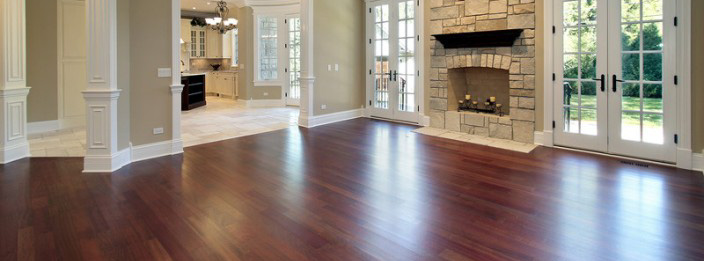

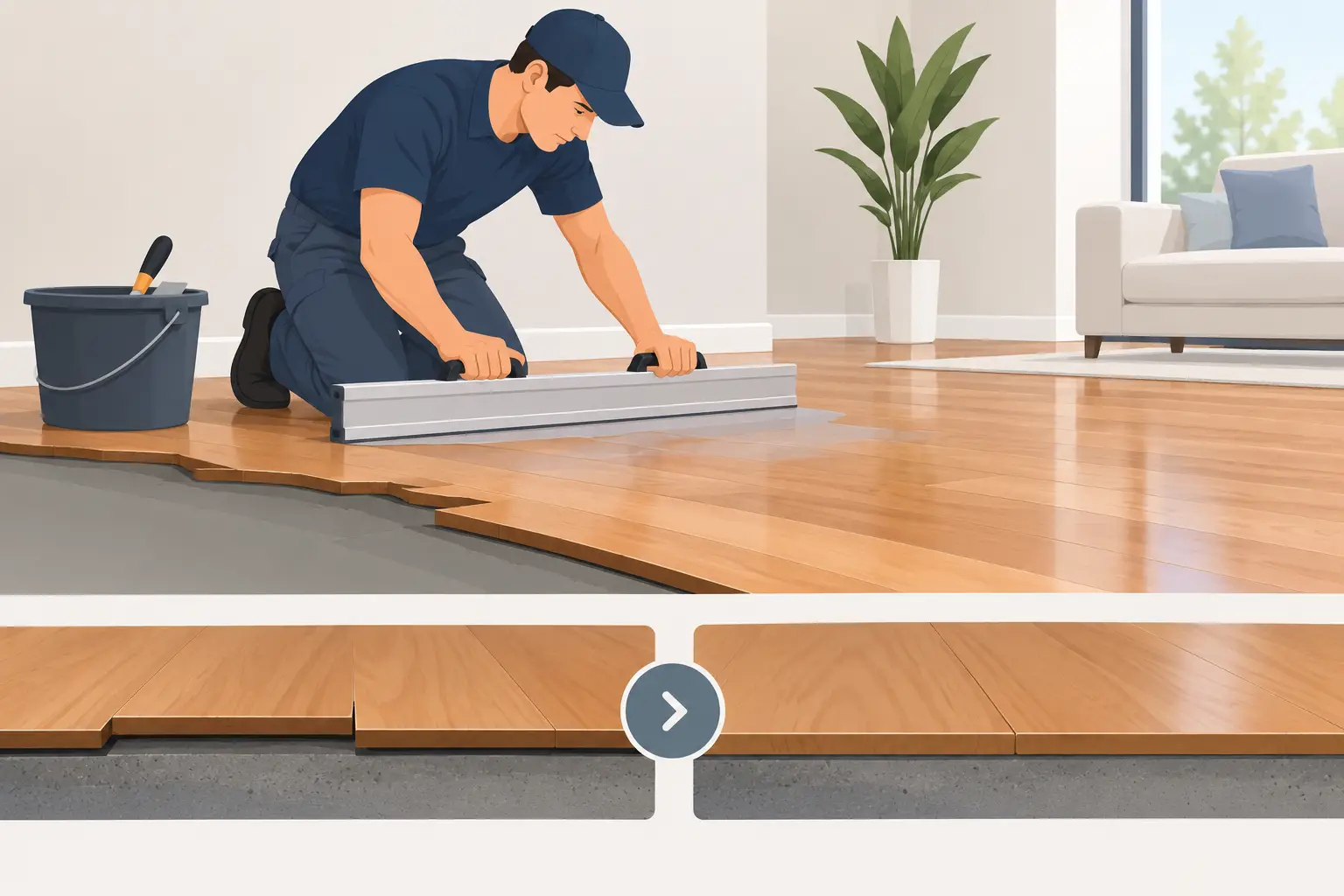
Sometimes the problem is relatively simple. Other times, moisture, subfloor damage or movement in the structure needs to be addressed before anything is done to the hardwood.
One thing is certain: sanding the top of an uneven floor is not automatically the solution. Before attempting to make the floor look better, we need to understand why it became uneven in the first place.
Why Do Hardwood Floors Become Uneven?
Hardwood follows the surface underneath it. If the subfloor isn't flat or stable, that condition can eventually become visible or noticeable in the finished floor.
Moisture is another common cause. A leaking appliance, plumbing problem, wet crawl space or moisture migrating through a concrete slab can affect both the hardwood and the materials underneath it.
Depending on the situation, moisture can cause hardwood boards to cup, crown, swell or separate.
Older Bay Area homes present another possibility. Many still have original hardwood flooring that has been in place for decades. The house and flooring system may have moved over time, leaving areas that aren't perfectly level even though the hardwood itself remains serviceable.
There is also an important distinction between a floor being level and being flat. An older house can have a gradual slope while still providing a reasonably flat surface for hardwood. A localized hump or depression is a different condition and may interfere with installation or refinishing.
When Should an Uneven Floor Be Investigated?
Not every variation in an older hardwood floor is a serious problem. But certain changes deserve closer inspection, particularly when they appear suddenly or continue getting worse.
- Boards move or flex when walked on.
- A previously flat area develops a noticeable hump or depression.
- Hardwood begins cupping or crowning.
- Boards separate or lift from the subfloor.
- There is visible water damage or staining.
- The floor develops recurring squeaks accompanied by movement.
- Damage from termites or dry rot is suspected.
These conditions shouldn't simply be covered with another flooring product or attacked with a sanding machine.
If the problem involves structural framing rather than the flooring system, the appropriate contractor or structural professional should address that problem before hardwood work continues.
Can Sanding Fix an Uneven Hardwood Floor?
Only within limits.
Professional hardwood floor sanding and finishing can correct minor surface irregularities while removing the old finish and preparing the hardwood for refinishing. That's very different from trying to sand away a significant hump or compensate for a low area underneath the floor.
A sanding machine removes wood. It doesn't repair the subfloor.
Aggressively sanding one section to make it match a low area can remove too much hardwood, expose fasteners or unnecessarily shorten the life of the floor.
Before deciding that sanding is the answer, we first determine whether the unevenness is actually in the hardwood surface or originates underneath it.
What If the Subfloor Is Uneven?
When an uneven hardwood floor is caused by the surface underneath it, the subfloor may need to be addressed before the hardwood can be properly repaired.
The exact procedure depends on the type of subfloor, severity of the problem and whether the hardwood can be preserved.
Loose or damaged subflooring may require repair. High areas may need to be corrected. Low areas may require appropriate preparation before hardwood is installed or reinstalled.
In some situations, existing hardwood must be removed to gain access to the problem underneath it. If the original flooring is solid hardwood and remains in good condition, we may be able to preserve some of the existing material and weave replacement boards into the surrounding floor.
Matching the species, dimensions and appearance of the original flooring becomes particularly important when performing this type of repair.
Uneven Concrete Requires a Different Approach
Concrete slabs create different challenges than wood subfloors.
Before hardwood is installed over concrete, the slab needs to be evaluated for both flatness and moisture. Correcting the surface without addressing an underlying moisture problem can lead to another flooring failure later.
This is particularly important with glue-down engineered hardwood. The flooring depends on proper preparation of the slab and a suitable adhesive system.
National Floors has installed engineered hardwood over Bay Area concrete slabs using moisture-control adhesive systems when conditions require them. The objective isn't simply to make the flooring stick to the concrete. The entire installation system has to work together.
Moisture Must Be Corrected Before the Floor
If moisture caused the hardwood to become uneven, correcting the source comes first.
A cupped floor, for example, shouldn't automatically be sanded flat while excessive moisture is still present. As the wood dries and changes dimension, a floor sanded too early can develop a different problem.
We want the hardwood and surrounding conditions to stabilize before determining what damage remains and what can be repaired.
The same principle applies to a leaking dishwasher, refrigerator, plumbing fixture or other water source. Repair the source first. Then evaluate the hardwood.
Prevention is better than cure.
Can Existing Hardwood Be Saved?
Quite often, yes.
This is one of the reasons we don't assume an ugly or uneven hardwood floor needs replacement.
Individual damaged boards can often be removed and replaced. When performed correctly, new boards can be woven into the existing flooring rather than leaving an obvious rectangular patch.
After repairs are completed, sanding the larger floor area can help blend the old and new hardwood together. Stain can then be applied when desired, followed by the appropriate finish system.
The species match matters. A repair made with the wrong hardwood can become much more noticeable after sanding and staining.
Engineered Hardwood Requires Extra Caution
Engineered hardwood has a real hardwood wear layer over a manufactured core. Unlike traditional solid hardwood, there is a limit to how much material can be removed from that surface.
If an engineered floor is uneven, aggressive sanding is particularly risky. Before refinishing, the remaining wear layer and construction of the flooring need to be evaluated.
Some engineered hardwood can be professionally sanded and refinished. Some cannot.
When the unevenness comes from the slab or subfloor underneath it, removing more material from the top of the engineered flooring doesn't correct the underlying problem anyway.
Correct the Cause Before Correcting the Appearance
This is the most important part of the entire discussion.
If moisture caused the problem, correct the moisture.
If damaged flooring caused it, repair the flooring.
If the subfloor is responsible, address the subfloor.
If there is a structural problem beyond the flooring system, have the appropriate professional correct it before refinishing the hardwood.
Only after the cause has been identified should the cosmetic restoration begin.
A qualified hardwood flooring contractor should be able to explain which portion of the problem involves the flooring and when another trade needs to become involved.
Don't Give Up on an Uneven Hardwood Floor
Hardwood is remarkably repairable. That's one of the reasons properly installed hardwood floors can remain in a home for generations.
National Floors has been repairing, sanding, refinishing and installing hardwood floors throughout the Bay Area for decades. When we encounter an uneven floor, our first question isn't how quickly we can sand it. We want to know why it's uneven.
Once the cause is understood, we can determine whether the existing hardwood can be repaired, whether boards need replacement, whether sanding and refinishing will restore the floor, or whether another problem needs to be corrected first.
Fix the cause first. Then fix the hardwood. That's how you create a repair that's meant to last.
