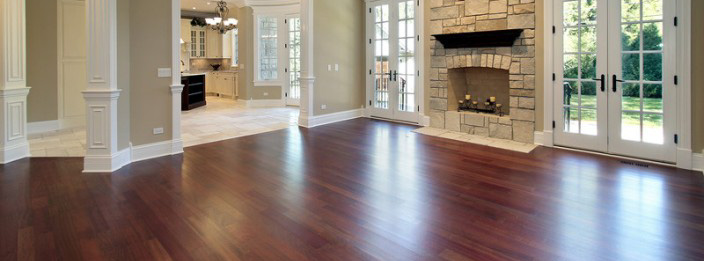

That's exactly what happened in my home. Our dishwasher developed a very slow leak — essentially a drip, drip, drip. There was never a puddle on the kitchen floor and no obvious warning that anything was wrong. The first indications weren't visible water at all.
It was the smell of mold and slight cupping of the hardwood floor.
The Damage Was Hiding Under the Dishwasher
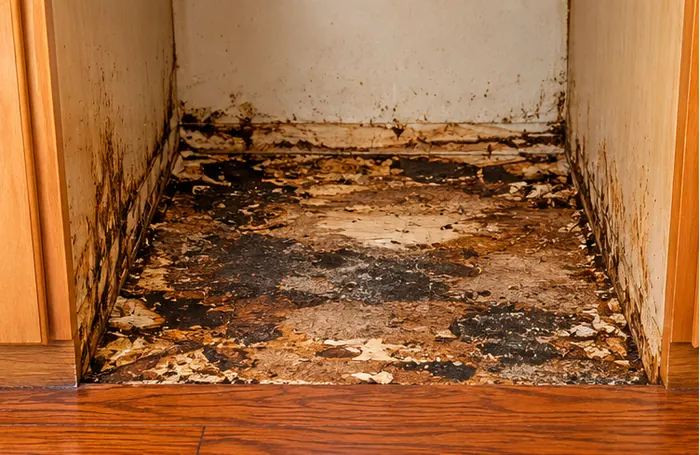
After removing the dishwasher for inspection, I found the subfloor was soaked. The particle board beneath the cabinet had absorbed enough water that it was rotted and had to be removed.
This is what makes a slow appliance leak so troublesome. A major leak usually announces itself quickly. A small leak can continue unnoticed while water slowly penetrates particle board, plywood, cabinets and eventually the subfloor.
By the time you see water, smell mold or notice a change in the surrounding hardwood floor, considerable damage may have already occurred.
After repairing the damage, I spent about $60 on a simple system designed to make sure a future dishwasher leak can't hide again. Instead of allowing water to disappear underneath the appliance, the system is designed to direct it onto the visible kitchen floor where it can be discovered immediately.
The First Step Was Removing the Rotted Particle Board
The damaged particle board had to come out before anything else could be done. Since it was thoroughly soaked, it didn't come out in one piece. I had to chip away at it and remove it a section at a time.
Once the particle board was gone, I was left with dozens of staples that had originally held it in place. Every one of those staples had to be pulled out with pliers before I could move on to drying and rebuilding the area.
Next Step: Getting Everything Completely Dry
Removing the damaged particle board was only the beginning. Before rebuilding anything, the wet subfloor needed time to dry.
I placed a floor dryer in the dishwasher opening and let it run for approximately four days. During that time, I periodically checked the subfloor with a moisture meter. I didn't move forward with the repair until the moisture reading had dropped low enough to safely begin rebuilding.
Drying the area thoroughly is also important for preventing mold growth. Fortunately, the original mold odor appeared to be coming from the damaged particle board that had already been removed. Once everything was exposed, the actual subfloor was still in good condition.
This is an important step. Covering damp wood with new material doesn't solve the moisture problem — it can simply trap it underneath the repair.
Replacing the Particle Board With 3/4-Inch Plywood
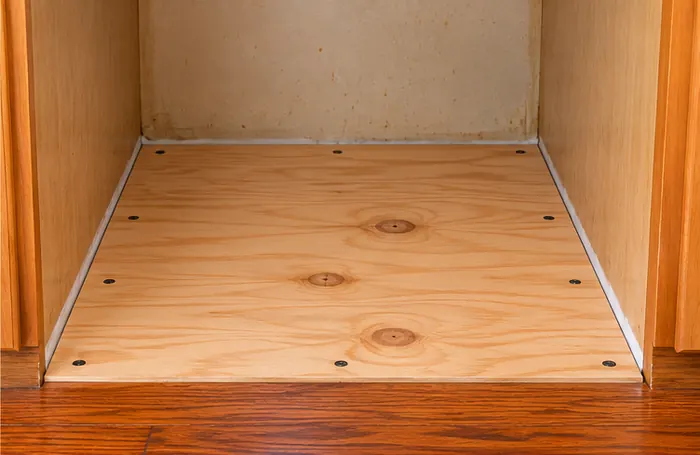
Once everything was dry, I replaced the deteriorated particle board with a piece of 3/4-inch plywood cut to fit the bottom of the dishwasher opening.
The plywood cost approximately $25. After positioning it, I screwed it securely into place and applied construction sealant around the perimeter as an additional precaution.
At this point, I had a solid new cabinet base and could have stopped there. Instead, I decided to add another layer of protection.
Adding a White Flex Seal Moisture Barrier
This next step was deliberately redundant, but after seeing what a tiny dishwasher leak had done, I felt the additional protection was worthwhile.
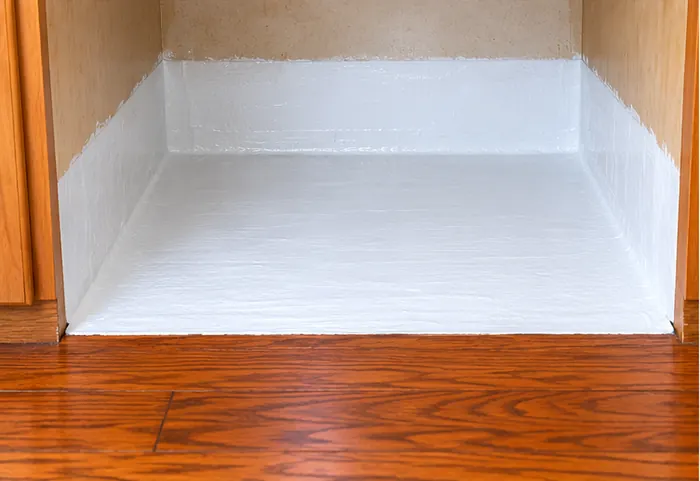
I applied multiple coats of white Flex Seal over the new plywood base and continued the coating approximately four inches up all three sides of the dishwasher cavity.
The Flex Seal cost approximately $15, plus a little time between coats. (National Floors is not sponsored by or affiliated with Flex Seal.)
The idea wasn't to make the dishwasher opening completely waterproof. It was to create another moisture-resistant barrier between a future leak and the cabinet, plywood and subfloor underneath it.
If water escapes from the dishwasher again, I'd much rather have it land on a sealed surface than immediately begin soaking into wood.
The Dishwasher Pan Turns a Hidden Leak Into a Visible One
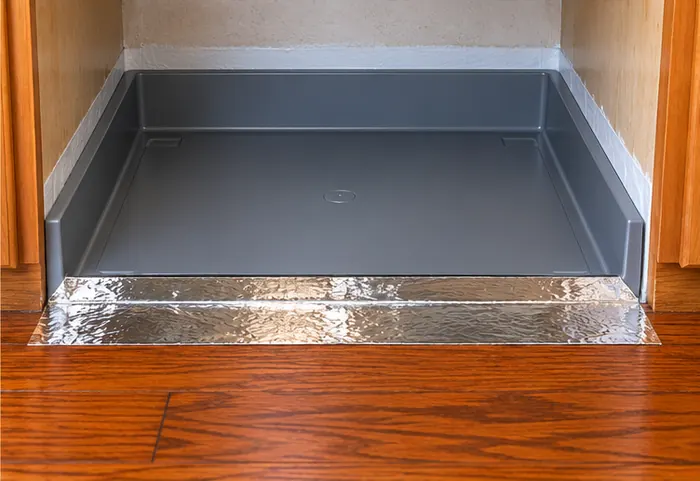
Next came the part that makes the entire system work: a dishwasher pan.
The pan cost approximately $20 and has raised edges along the back and sides. The front of the pan is open.
That open front is exactly what I wanted.
The goal isn't simply to contain leaking water underneath the dishwasher. I want the water to reveal itself as soon as possible. The three raised sides help control the direction of the water while the open front gives it somewhere to go.
Connecting the Dishwasher Pan to the Hardwood Floor
I took the idea one step further by applying a strip of weather-resistant foil between the front edge of the dishwasher pan and the finished hardwood kitchen floor. In my case, this foil was included with the new dishwasher, although similar material can be purchased separately.
This creates a continuous path from the dishwasher pan onto the visible floor.
If the dishwasher develops another leak, the water should enter the pan, travel toward its open front and move across the protected transition onto the hardwood floor.
In other words, I want to see the water.
Normally, the last thing a hardwood floor contractor wants is water on a wood floor. But a small amount of visible water that immediately alerts a homeowner is far better than an invisible leak soaking a cabinet and subfloor for weeks or months.
The water on the kitchen floor becomes the warning system.
About $60 Could Prevent Thousands of Dollars in Damage
The main materials used for the repair and protection were surprisingly inexpensive:
- 3/4-inch plywood: approximately $25
- White Flex Seal: approximately $15
- Dishwasher pan: approximately $20
I already had the construction sealant and weather-resistant foil available, so my primary material cost was approximately $60.
There was some work involved, but nothing particularly complicated for someone comfortable with basic home repairs.
Compare that with the potential consequences of an undetected dishwasher leak: damaged cabinetry, mold, deteriorated subflooring, damaged hardwood flooring and potentially an insurance claim.
I'm Not Trying to Prevent the Dishwasher From Ever Leaking
Appliances eventually fail. A hose can crack, a connection can loosen, a seal can deteriorate or something inside the dishwasher can simply wear out.
I can't guarantee that this dishwasher — or the next one — will never leak.
What I can control is how long that leak remains hidden.
The plywood provides a solid replacement for the damaged particle board. The white Flex Seal adds a moisture-resistant barrier. The dishwasher pan controls where escaping water travels. The foil transition provides a path from the pan onto the visible hardwood floor.
Instead of hoping another leak never occurs, I've created a simple system designed to tell me quickly if it does.
Why This Matters With Hardwood Flooring
After working with hardwood floors for decades, I've seen how quickly a relatively small moisture problem can turn into an expensive flooring problem when it isn't discovered early.
Water that reaches hardwood flooring can cause cupping, crowning, staining, finish damage and movement. If moisture gets underneath the flooring and into the subfloor, the repair can become considerably more involved.
Depending on the extent of the damage, professional hardwood floor sanding and refinishing may be able to restore the floor. More serious water damage can require board replacement, subfloor repairs or other corrective work before refinishing can even begin.
That's why I'd much rather discover a dishwasher leak on day one than discover it weeks later because something smells wrong or the hardwood floor begins to cup.
A Small Investment for a Very Expensive Problem
This approximately $60 solution won't make my dishwasher leak-proof, and that isn't the point.
The objective is to protect the surrounding materials and make a future leak difficult to hide. If water escapes, I want it directed somewhere I can see it so I can shut down the dishwasher and correct the problem before a small leak becomes major water damage.
After seeing firsthand what a tiny, unnoticed drip can do, the plywood, moisture barrier and dishwasher pan are inexpensive insurance.
Sometimes the best protection isn't preventing a leak. It's making sure you know about it immediately.
