
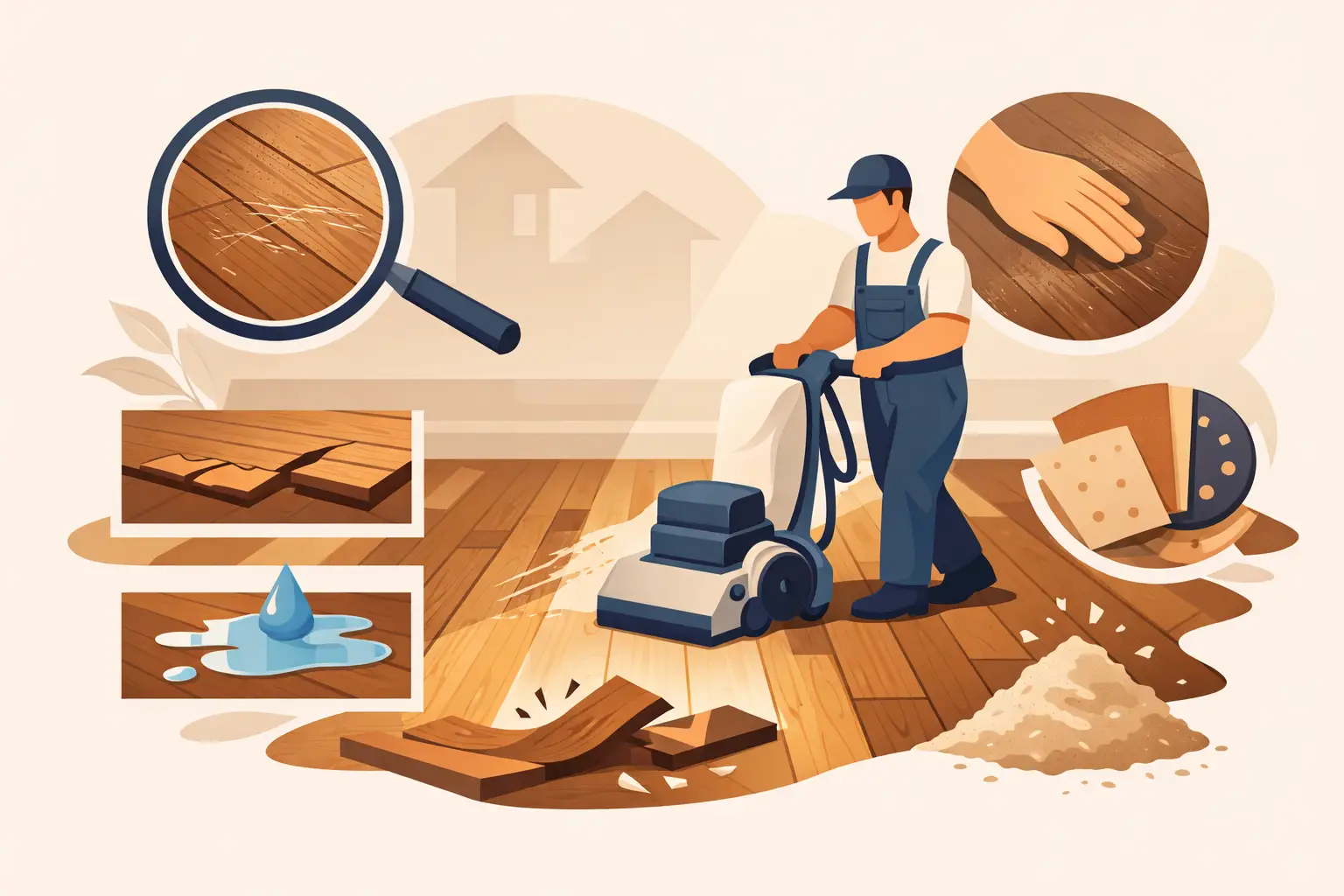
Recognizing the signs hardwood floors need sanding can help homeowners act before normal finish wear becomes damage to the wood underneath. In many cases, sanding and refinishing can restore an existing hardwood floor rather than replacing it.
Sanding, however, is not automatically the answer every time a hardwood floor looks worn. The condition of the finish, depth of the damage, moisture level, flooring construction and amount of usable wood remaining all need to be considered first.
1. Scratches Have Cut Through to Bare Wood
Light scratches in a hardwood floor finish are normal. Chairs, pets, shoes and everyday use will eventually leave marks, particularly in entrances, hallways, kitchens and other heavily traveled areas.
If those scratches are limited to the protective finish, complete sanding may not yet be necessary. Depending on the condition of the existing coating, a professional maintenance coat may be enough to restore protection.
The situation changes when scratches penetrate the finish and expose bare hardwood.
Once the protective coating is gone, dirt, spills and moisture can enter the wood itself. What begins as a scratch can eventually become discoloration or a deeper stain that is considerably more difficult to remove.
If scratches are widespread and bare wood is visible throughout the traffic areas, sanding and refinishing should be considered before additional damage develops.
2. The Finish Has Worn Away in Traffic Areas
One of the easiest ways to evaluate a hardwood floor is to compare the center of the room with areas near the walls.
The perimeter often receives very little foot traffic and may still retain much of its original appearance. The path between a hallway and kitchen, around a dining table or through a frequently used doorway may look noticeably duller.
That difference is often caused by the protective finish gradually wearing away.
The finish is designed to absorb everyday wear so the hardwood underneath does not have to. Once that protection becomes extremely thin or disappears completely, normal traffic begins wearing directly against the wood.
Professional hardwood floor sanding and refinishing removes the worn surface and allows a new protective finish system to be applied across the entire floor.
3. Water Marks or Dark Stains Are Appearing
Dark areas around exterior doors, windows, refrigerators, dishwashers, sinks, pet bowls or plant containers deserve attention.
Discoloration can indicate that moisture has passed through the finish and entered the hardwood. How much of that discoloration can be removed by sanding depends on how deeply it has penetrated.
Some surface stains disappear during normal refinishing. Deep discoloration can penetrate much farther into the board and may remain visible even after substantial sanding. In more severe cases, individual boards may need to be repaired or replaced.
Most importantly, the source of the water must be identified and corrected before the hardwood is restored. National Floors' hardwood floor water-damage information explains why drying the affected area and resolving the source of the moisture must come before flooring repairs.
There is little value in refinishing a damaged floor if an active leak or moisture problem remains underneath it.
4. The Finish Is Peeling, Flaking or Permanently Cloudy
A hardwood floor finish should gradually wear with use. It should not normally peel away in large patches.
Peeling, flaking, bubbling or persistent cloudy areas can indicate several possible problems, including moisture, contamination, incompatible cleaning products or a previous coating that did not bond correctly.
Simply applying another coat over a failing finish does not correct the underlying problem. The new coating is only as dependable as the surface underneath it.
When the existing finish has failed extensively, sanding back to a properly prepared wood surface may be necessary before a new finish system is applied.
5. Deep Gouges, Damage or Old Repairs Are Visible
A single damaged board does not necessarily mean an entire room needs to be refinished. Localized hardwood damage can sometimes be repaired by replacing an individual board or addressing a small section of flooring.
The decision becomes different when deep scratches, gouges and previous repairs are scattered throughout the room.
Spot repairs can also be difficult to blend perfectly with an older hardwood floor. Wood changes color naturally with age, sunlight and exposure. A newly repaired area may therefore look different from the surrounding floor.
When damage is widespread, repairing the necessary boards and then sanding the entire floor can produce a much more uniform appearance than attempting numerous isolated touch-ups.
6. The Floor Looks Dated Even Though the Wood Is Still Good
Sometimes there is nothing structurally wrong with a hardwood floor. The homeowner simply doesn't like the way it looks anymore.
Older stain colors, ambered finishes, heavy gloss or years of uneven wear can make otherwise excellent hardwood look dated.
One of the major advantages of genuine hardwood is that the appearance can often be changed without replacing the floor.
Sanding removes the existing finish and exposes fresh wood. At that point, the floor can remain natural or a completely different color can be created through hardwood floor staining.
The hardwood species matters when selecting a stain. Oak accepts a broad range of colors, while species such as maple can react differently and require greater care during sanding and staining. The final color should therefore be evaluated on the actual hardwood rather than selected solely from a printed chart or photograph.
Natural grain, mineral streaks and other characteristics of real wood will still remain. Refinishing restores the surface; it does not turn genuine hardwood into a perfectly uniform manufactured product.
7. Bare Areas Are Beginning to Absorb Moisture
A healthy finish creates a protective barrier between everyday spills and the hardwood underneath. When that barrier has worn away, exposed wood can begin absorbing moisture much more readily.
Homeowners sometimes use a small drop of water to see whether moisture beads on the surface or immediately darkens the wood. While this can reveal an obviously worn area, repeatedly applying water to a hardwood floor is not something we recommend as a diagnostic test.
Visible bare wood, dull traffic areas and obvious finish loss already provide good reasons to have the floor professionally evaluated.
An inspection can also determine things that a surface water test cannot, including the construction of the floor, previous sanding, remaining wear layer and whether moisture exists underneath the flooring.
When Sanding Is Not the First Answer
Not every dull hardwood floor needs to be completely sanded.
If the hardwood itself is still in good condition and the wear is limited to the protective finish, a professional recoat may extend the life of the floor without removing unnecessary wood.
A recoat prepares the existing finish and adds another protective layer. It does not remove the damaged wood surface.
Deep scratches, gouges, significant discoloration, damaged stain and other problems that extend into the hardwood generally require sanding because the damaged surface itself needs to be removed.
The distinction is important: a recoat renews the protective surface, while sanding and refinishing renews the wood surface.
Do Not Sand Cupped Hardwood Too Soon
Cupping deserves special attention because sanding at the wrong time can create another problem.
A cupped hardwood board has edges that are higher than its center. This usually occurs because the underside of the flooring contains more moisture than the top.
The first priority is not sanding. The first priority is identifying the source of the moisture, correcting it and allowing the flooring and surrounding structure to dry.
Sanding a cupped floor flat before the moisture condition stabilizes can remove more material from the raised edges. If the boards later return toward their original shape as they dry, the center can end up higher than the edges.
For that reason, moisture-damaged hardwood should be evaluated before deciding whether it needs drying, board replacement, sanding or some combination of repairs.
Solid and Engineered Hardwood Require Different Decisions
Traditional solid hardwood can often be sanded and refinished multiple times because there is considerably more usable hardwood above the tongue and groove.
Engineered hardwood is different. Only the upper portion of the board is genuine hardwood suitable for sanding. The thickness of this wear layer determines whether conventional refinishing can safely be performed.
Some engineered hardwood floors have a substantial wear layer. Others have very little material available. Sanding through that hardwood layer exposes the core underneath and can permanently damage the flooring.
Before sanding engineered hardwood, National Floors determines how much actual hardwood is available rather than assuming that every engineered floor can be refinished.
Have the Floor Evaluated Before the Damage Gets Worse
Professional hardwood floor sanding is a precision process. The objective is to remove the old finish and damaged wood while preserving as much of the hardwood floor as possible.
Before recommending refinishing, National Floors evaluates the flooring type, condition, previous sanding, scratches, stains, repairs, moisture concerns and the amount of usable hardwood remaining.
If the hardwood is still sound and only the protective finish is worn, sanding may not yet be necessary. If the finish has worn through and bare wood, deep scratches, stains or widespread damage are developing, waiting can allow relatively manageable surface wear to become a more extensive repair.
National Floors is a California C-15 licensed flooring contractor specializing in hardwood floor sanding, staining, refinishing and restoration throughout the San Francisco Bay Area. Having the floor evaluated while the original hardwood is still in restorable condition can help preserve it for many more years.
