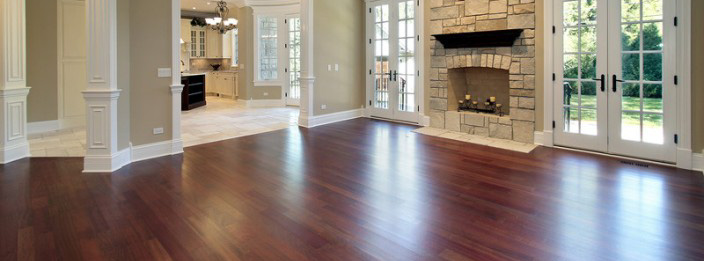

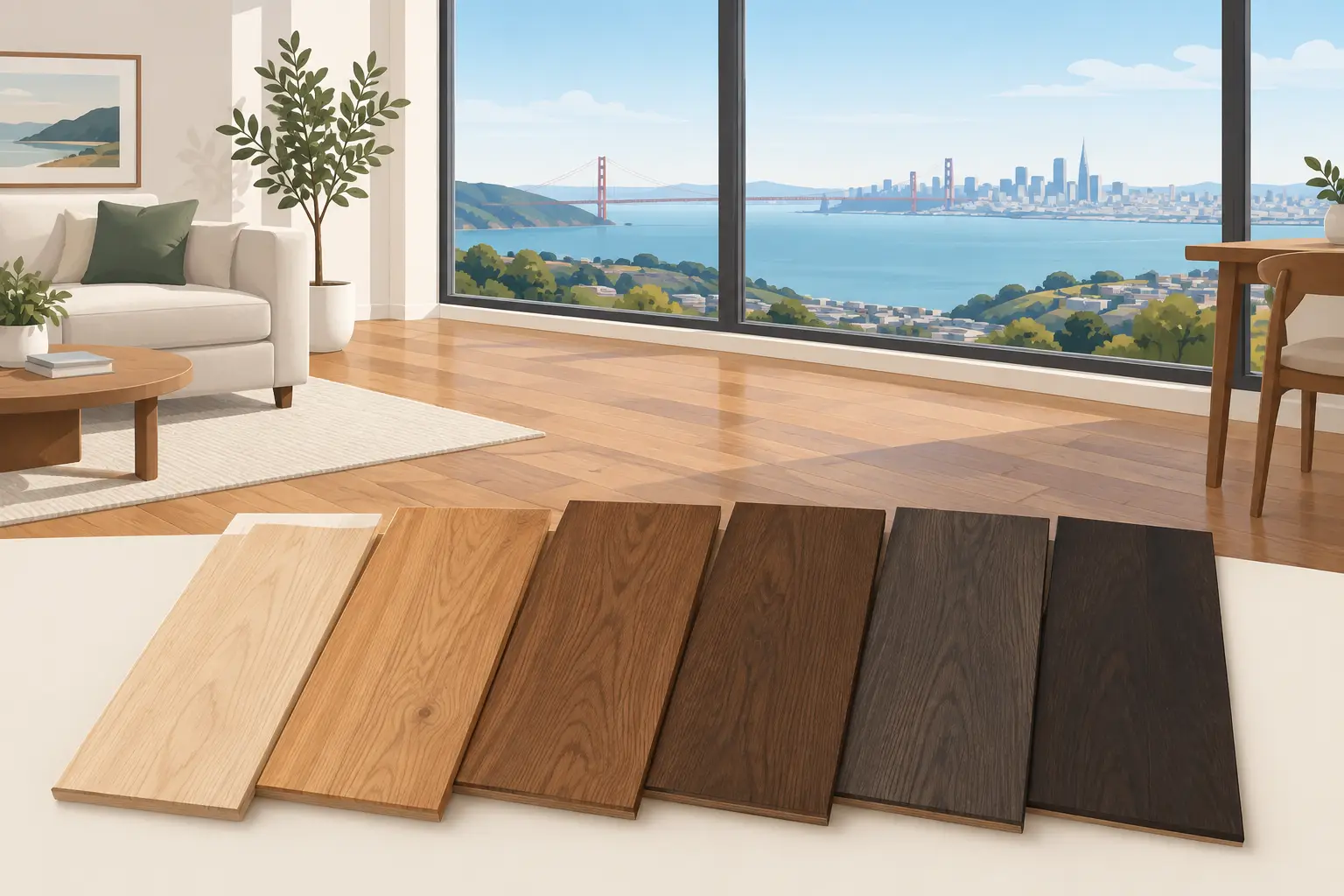
For many Bay Area homeowners, the hardwood is already there. Original oak floors may be hidden beneath an old amber finish, scratches, stains or decades of wear. Professional hardwood floor sanding and finishing removes those old coatings and exposes the natural wood again, creating an opportunity to keep the floor natural or completely change its color.
There is one rule we strongly recommend: never choose a hardwood stain color based solely on a photograph or small sample board. Test the color on your actual floor.
The Best Hardwood Floor Color Starts With the Wood
Different hardwood species react very differently to stain. This is one of the most important things homeowners should understand before choosing a color.
White oak is extremely versatile. Its natural brown and slightly olive undertones work well with natural finishes, medium browns, weathered colors and many of today's lighter stains.
Red oak has warmer pink and reddish undertones and a prominent grain pattern. It accepts stain very well, but those natural undertones influence the final color. A stain that looks cool gray on white oak may look considerably warmer when applied to red oak.
Maple can also be stained, but it requires more care. Because maple is dense and does not absorb stain as evenly as oak, proper sanding and stain application are especially important.
Engineered hardwood requires another consideration. Before sanding an engineered floor, the thickness and condition of its hardwood wear layer must be evaluated. Some engineered floors can be professionally sanded and refinished, while others do not have enough usable hardwood remaining to safely sand them again.
Repairs also matter. If damaged boards have been replaced over the years, the replacement wood must be properly matched to the existing species. Differences that are difficult to see on bare wood can become much more obvious after stain is applied.
This is one reason an evaluation by a qualified hardwood flooring contractor should come before the final color decision.
Natural Hardwood Floors
Sometimes the best stain color is no stain at all.
Natural oak remains one of the most versatile choices for Bay Area homes because it allows the grain and character of the wood to remain visible. Once an old yellowed or amber finish is sanded away, homeowners are often surprised by how attractive their original hardwood looks in its natural state.
The finish system also influences the final appearance. Many modern water-based finishes preserve a lighter, more natural appearance, while some oil-based products add additional warmth and amber tones.
Natural floors also work well with changing interior styles. Paint, furniture and decorating trends will change many times during the life of a hardwood floor. Natural wood doesn't need to follow every trend.
Light and Whitewashed Hardwood Floors
Light stains, soft blonde colors, whitewashed finishes and Scandinavian-inspired floors can create a bright, open appearance. These colors are particularly attractive on white oak.
Red oak requires more consideration. Its natural red and pink undertones don't disappear simply because a light or white stain is applied. Depending on the product, those undertones may remain visible in the finished floor.
Preparation becomes especially important with very light stains. Old finish or stain left behind in the grain, uneven sanding or inconsistent stain application can become noticeable once the floor is finished.
When a homeowner wants a very specific light appearance, we prefer to make samples directly on the sanded floor before committing to the entire room.
Medium Brown Hardwood Floors
Medium brown is one of the most practical hardwood floor colors because it provides warmth without overwhelming the natural grain.
Walnut, chestnut, medium oak and similar brown tones work well with many Bay Area homes, from older properties with traditional oak flooring to remodeled homes with more contemporary interiors.
Medium colors can also be forgiving in an active household. Normal wear, small scratches and minor variations between boards generally don't contrast as dramatically as they can with extremely dark stains.
The goal shouldn't be to cover the wood. A good stain should complement the grain rather than make the hardwood look painted.
Dark Hardwood Stains
Dark walnut, espresso and other deep stains can create a dramatic floor, especially in larger rooms with plenty of natural light.
There is a trade-off.
Dark hardwood tends to show dust, footprints, light-colored pet hair and surface scratches more readily. If a scratch penetrates the finish and exposes lighter wood underneath, the contrast can make the damage more noticeable.
Homeowners considering a very dark floor should think about how the room is actually used, not just how the color looks in a photograph.
Dark stain also shouldn't be viewed as a guaranteed way to hide damaged hardwood. Pet stains, water damage, previous repairs and variations in the wood can still affect the finished appearance. Those areas should be evaluated during the sanding and repair process before the final stain color is selected.
Gray and Greige Hardwood Floors
Gray hardwood was extremely popular for several years. Today we see homeowners leaning more toward warmer gray-brown and greige colors rather than cold gray floors.
The species of hardwood makes an enormous difference with these colors.
White oak generally works well with weathered gray, taupe and greige stains. Red oak can be more challenging because its natural red undertones interact with cooler stain colors.
That's another reason we don't recommend choosing a stain by looking at a manufacturer's color chart. The same stain applied to white oak and red oak can produce two noticeably different floors.
Consider the Entire Room Before Choosing a Color
A hardwood floor doesn't exist by itself. Cabinets, stair treads, baseboards, doors, furniture, tile and wall colors all influence how the finished floor will look.
Natural light is equally important. A stain viewed in bright afternoon sunlight can look different in the evening under artificial lighting.
If hardwood continues through several rooms, look at the samples from different areas of the house. A color that looks perfect beside the kitchen cabinets should also work in the hallway, living room and bedrooms.
Homeowners with children, pets or heavy foot traffic should also consider maintenance. Medium natural colors, visible grain and lower-sheen finishes tend to be more forgiving than extremely dark, high-gloss floors. Our hardwood floor care guide explains some of the simple steps that help protect a newly refinished floor.
Test Hardwood Stain on Your Actual Floor
This is where experience beats a stain chart.
After the old finish has been removed and the hardwood has been properly sanded, stain samples can be applied directly to the floor. Now you are looking at the actual species of wood in your home, under your lighting and next to your cabinets, walls and furniture.
Look at the samples in the morning, afternoon and evening. What appears neutral in daylight may look warmer under interior lighting.
Once you've narrowed the choices, consider how the final sealer and finish will affect the appearance as well. The stain is only one part of the finished color.
Let the Hardwood Help Choose the Color
National Floors has been sanding and refinishing hardwood floors throughout the Bay Area for decades. One lesson we've learned is that the floor itself usually tells us a great deal about which colors will work best.
The species, age, previous repairs, existing stains and overall condition of the hardwood should all be considered before making the final decision.
If you're considering changing the color of your hardwood floors, National Floors can evaluate the existing wood, discuss the available options and create stain samples during the refinishing process. The goal isn't simply to choose a popular color. It's to choose a color that works with your floor and your home.
