
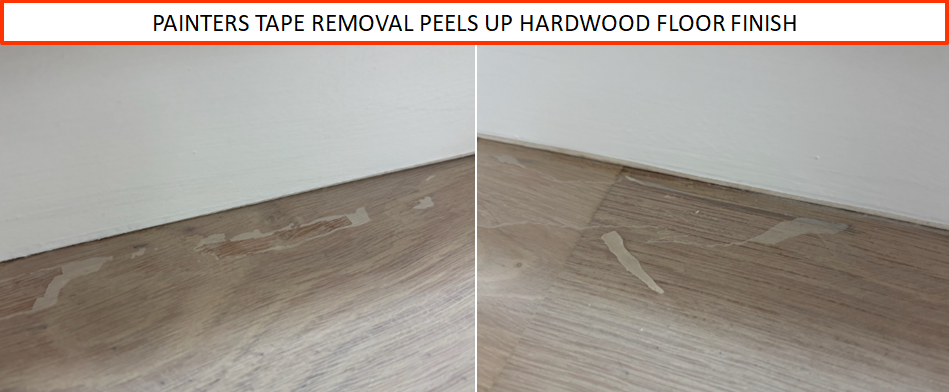
Every year, homeowners discover that improperly removing painter's tape has also removed part of the finish from their hardwood floors. In some cases, the damage is minor. In others, entire sections of the finish peel away, leaving a dull, rough, or discolored appearance that requires professional repair.
Why Can Painter's Tape Damage Hardwood Floors?
The adhesive used on painter's tape is designed to stick securely while paint is applied. Although it is less aggressive than standard masking tape, the adhesive can still form a surprisingly strong bond with certain hardwood floor finishes.
When the tape is removed, it doesn't always release cleanly. Instead, it may pull on the finish itself. If the bond between the tape and the finish becomes stronger than the bond between the finish and the wood, the finish will lift right off the floor. This is serious damage that can really effect the aesthetics of the hardwood floor.
Several Factors Increase the Risk
Not every hardwood floor reacts the same way. Several conditions can make finish damage more likely.
- Older finishes that have begun to lose their bond.
- Recently refinished floors that have not fully cured.
- Tape left in place for several days or weeks.
- Exposure to direct sunlight or heat, which can strengthen the adhesive.
- Certain finish products that naturally bond more aggressively with adhesives.
Even if two floors appear identical, one may release the tape without issue while the other experiences finish failure.
Not All Damage Is a Sign of Poor Workmanship
One of the biggest misconceptions is that peeled finish automatically means the floor was improperly refinished. While poor preparation or improper finishing can certainly contribute to adhesion problems, that is far from the only explanation.
Hardwood floors expand and contract with seasonal changes in temperature and humidity. Over many years, normal wear, cleaning products, sunlight, moisture, and everyday traffic can gradually weaken the bond between the finish and the wood. When painter's tape is removed, it may simply expose a weakness that already existed.
For that reason, it's important not to assume that the last flooring contractor is responsible whenever finish peels with tape.
How Professionals Protect Hardwood Floors
Professional painters and flooring contractors understand that hardwood floors deserve extra care. Instead of applying tape directly to the finished floor whenever possible, they often use alternative methods to secure protective coverings.
Rosin paper, builder's paper, drop cloths, floor protection boards, and specialized surface protection products can often provide excellent protection while minimizing the risk of damaging the finish.
If tape must be used, it should only remain in place for the shortest time necessary and should always be tested in an inconspicuous area first.
What If the Finish Has Already Peeled?
If only a small amount of finish has lifted, resist the temptation to simply brush on more polyurethane. Most modern finishes do not blend seamlessly with existing coatings, and spot repairs often leave noticeable lap marks or differences in sheen.
The proper repair depends on the extent of the damage, the type of finish originally used, and the overall condition of the floor. In some situations, a localized repair may be possible. In others, the affected boards or even the entire room may need to be recoated to restore a uniform appearance.
Professional Tip
We would not advise applying painters tape to hardwood floors. The finish on hardwood floors is designed for downwward force and wearability. It's not known for a strong adhesion to reist pulling forces from the floor.
The Painters Defense
We have worked side by side with professional painters for decades. Most painter's will claim taping the floors works all the time. The fact is, it may work most of the time, but when the finish comes up, those painters are paying for floor repair. The damage is always most notable when the floors have just been refinished, that's when flaws really stick out. When the floors are older, it's easy to turn a blind eye and accept the error and hope it's over looked during inspection.
Removal of Painters Tape from Hardwood Floors
If you must, before applying any painter's tape to a hardwood floor, test a small hidden area first. Even products labeled as "delicate surface" or "safe release" can react differently depending on the age and condition of the finish. A simple test can help prevent an expensive repair later.
When it comes time to remove the tape, you should NEVER pull up vertically on the tape. This will have the greatest chance of pulling up the finish.
Instead, when it comes time to remove painters tape from hardwood floors, grab an end of the tape. While keeping your hand close to the floor, pull at a 90* angle. Do this very slowly. This will be the safest way to remove the tape, but there are no guarantees.
Conclusion
Painter's tape is an excellent product when used appropriately, but no tape can guarantee that it won't affect every hardwood floor finish. Understanding how adhesives interact with polyurethane and other floor finishes can help homeowners avoid unnecessary damage during painting and remodeling projects.
If you're unsure how to protect your hardwood floors during your next project, consulting a professional before applying tape can save both time and money.
