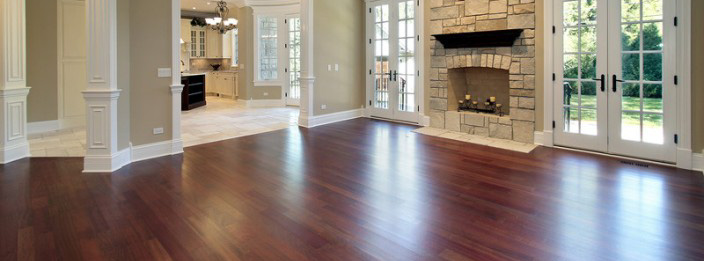

A professional assessment separates cosmetic wear from genuine floor failure. That distinction can save a homeowner from replacing sound hardwood unnecessarily, while also preventing an unsuitable refinishing job on material that has reached its limit.
What Your Wood Flooring Is Telling You
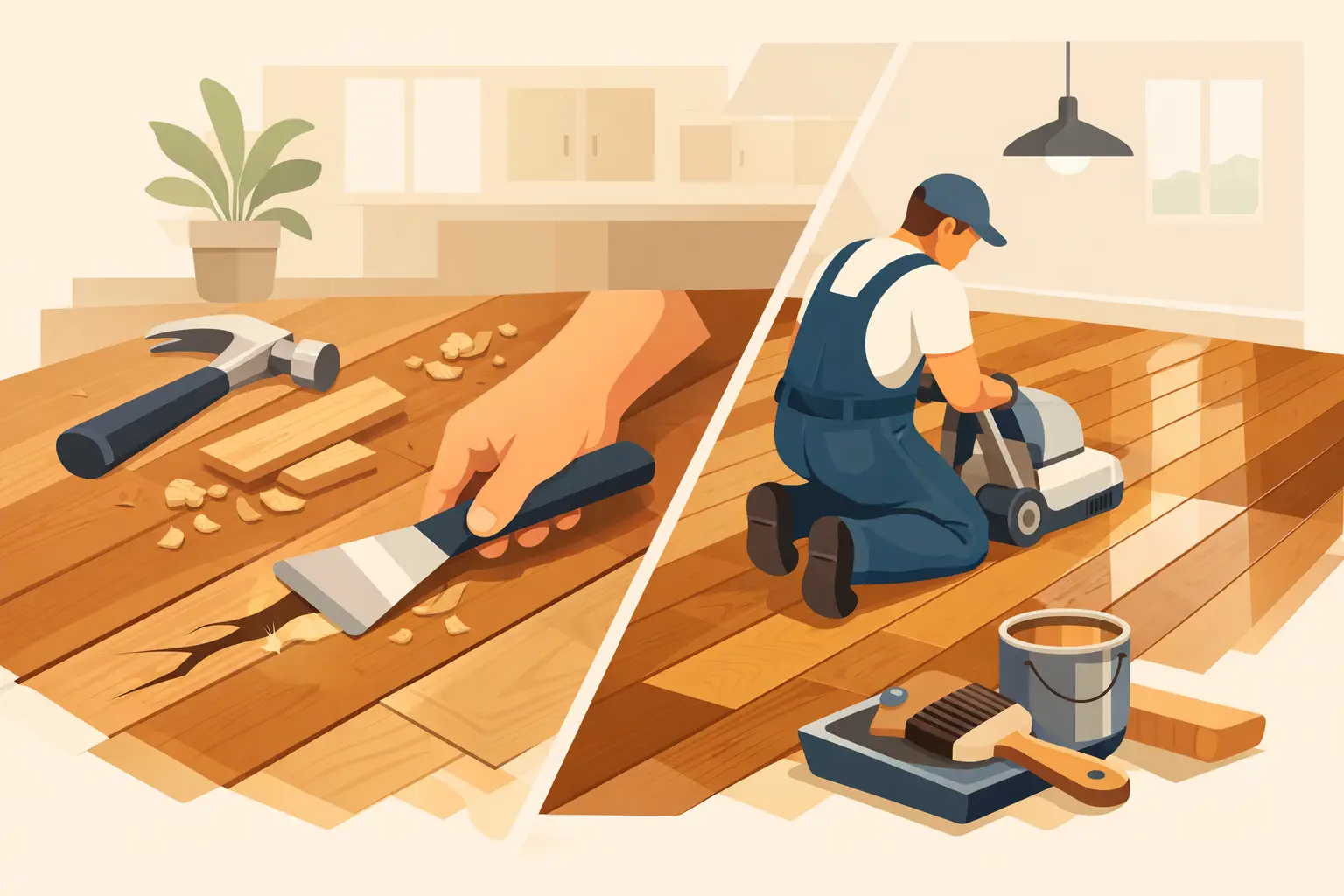
Surface scratches, faded traffic lanes and a finish that no longer repels water are often signs that a floor needs refinishing, not replacement. Solid hardwood can usually be sanded back to clean timber, then stained if desired and protected with a new finish. The transformation is substantial: damaged-looking boards regain even color, smoother texture and a finish designed for daily use.
Some problems require more than sanding. Deep gouges, black water marks, loose boards, gaps, termite damage and persistent cupping need to be investigated before refinishing begins. Sanding a cupped floor without resolving the source of moisture, for example, can make the boards thinner without correcting the reason they moved in the first place.
Bay Area properties present a broad range of conditions. Older San Francisco and Oakland homes may have original strip flooring with repairs from several past renovations. Homes in San Jose, Fremont, Sunnyvale and Palo Alto may have engineered flooring over a concrete slab, where moisture control and the condition of the wear layer are central to the decision. A floor can look similar on the surface while requiring a very different method underneath.
Signs Refinishing May Be the Right Investment
Refinishing is normally a strong option when the boards are stable, the damage is limited to the surface and there is enough usable wood to sand safely. It is particularly worthwhile for genuine solid hardwood because solid boards can often be refinished more than once during their lifespan. Rather than covering a quality material, refinishing preserves the character and value already built into the home.
A water-drop test can offer an early clue. If a few drops soak in quickly and darken the timber, the protective finish may be worn out. That does not confirm the floor can be sanded, but it does indicate the surface is no longer offering proper protection. A contractor should still check for previous sanding, thin boards, damaged tongues and hidden repairs.
Refinishing also makes sense before selling a property. Buyers notice floors immediately, and a clean, consistent finish can make rooms feel brighter, larger and better maintained. It is often a more cost-effective improvement than installing a new floor simply to correct an outdated stain or neglected surface.
When Repair or Replacement Is Necessary
Replacement becomes more likely when there is extensive rot, severe insect damage, structural movement or a floor that has already been sanded too many times. Individual boards may be replaced where damage is localised, then blended into the surrounding floor through careful sanding, staining and finishing. A good repair should address both the damaged area and the visual transition around it.
Engineered wood needs particular care. It has a real-wood wear layer over a multi-layer core, but that top layer varies in thickness. Some engineered products can be lightly sanded and refinished; others cannot tolerate sanding without exposing the layer below. This is why identifying the exact product, or at least inspecting an exposed edge or spare board, matters before approving work.
If replacement is required, it is also the chance to correct an installation problem. Floors installed over concrete may need proper moisture testing, vapour protection and an appropriate glue-down or floating system. Skipping these steps can lead to cupping, lifting, gaps or adhesive failure, even when the new boards themselves are high quality.
Choosing Wood Flooring for Bay Area Conditions
Solid hardwood remains a preferred choice for homeowners who want a long-term floor with repeat refinishing potential. Oak is especially popular because it is durable, widely available and accepts a range of stain colours well. It suits traditional homes as comfortably as updated interiors, whether the goal is a natural clear finish or a deeper custom tone.
Engineered wood is often practical where slab foundations, changing indoor conditions or installation height create limitations for solid timber. Its layered construction can provide greater dimensional stability, though it is not immune to moisture problems. Product quality, wear-layer thickness and the preparation of the subfloor all affect how well it performs.
Bamboo is another option, but it should be selected with care. Quality varies greatly, and not every bamboo product is suitable for the same level of sanding, repair or humidity exposure. The best choice is never simply the material with the lowest initial price. Consider the expected foot traffic, pets, children, direct sunlight, subfloor type and whether you want the floor to be refinished in future.
Colour deserves practical consideration too. Very dark stains can show dust, pet hair and fine scratches more readily. Very pale finishes can reveal dirt in entryways. A medium natural tone often offers an easier balance for busy households, while a high-quality finish provides the protection that stain alone cannot.
Why Professional Preparation Makes the Difference
The visible result of a refinished floor is determined long before the final coat dries. Proper work begins with checking the floor for movement, protruding fasteners, damaged boards, contamination and moisture concerns. Repairs need to be completed before the main sanding sequence, not treated as an afterthought.
Dust-controlled sanding equipment helps keep the work area cleaner and improves visibility during the job. More importantly, skilled sanding removes old finish and levels normal wear without taking away more timber than necessary. Corners, edges, thresholds and stair treads require their own techniques because large sanding machines cannot reach every area safely.
Staining is equally technical. Timber species, grain direction, previous repairs and natural colour variation all influence the final appearance. A custom stain sample applied to the actual floor is far more reliable than choosing from a small display card. It allows the homeowner to see how the colour reacts to their own wood and their home’s natural light.
The final finish should match the way the space is used. A family room, rental property, hallway and recreation hall do not experience the same wear. The right coating system, preparation and cure time help a floor resist everyday abrasion while retaining its intended sheen. Rushing furniture back onto a newly finished floor can compromise an otherwise excellent result, so follow the contractor’s guidance on drying and curing.
Questions to Settle Before Work Begins
Before authorising any floor project, ask whether the floor is solid wood or engineered, whether moisture readings will be taken where relevant, and how damaged boards will be handled. Confirm whether the quoted work includes preparation, sanding, staining, sealing, finishing, trims and clean-up. Clear project scope avoids unwelcome changes once the floor has been opened up.
It is also sensible to ask about credentials and process. Hardwood flooring is a specialist trade, particularly when a project involves repairs, older materials, engineered products or moisture-related failure. A properly qualified contractor should be able to explain why a floor can be restored, where the risks are, and when replacement is the more honest recommendation.
For Bay Area homeowners, a free in-home assessment is the most reliable starting point because it replaces guesswork with an inspection of the actual boards, subfloor and room conditions. National Floors brings C-15 hardwood-floor specialist expertise and NWFA-informed methods to that decision, whether the best outcome is careful refinishing, targeted repair or a new installation built to last.
Your floor should not be judged by its current shine alone. When the structure is sound and the work is planned correctly, restoring real wood can protect a valuable part of the home for many more years.
