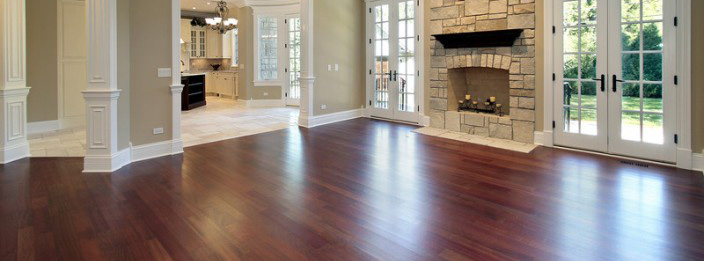

Water damage, pet stains, termites, deep gouges and broken boards can all make hardwood look worse than it actually is. Before recommending replacement, National Floors looks at the cause and extent of the damage, the condition of the surrounding hardwood and whether the existing floor has enough material remaining to be professionally sanded.
Sometimes a few boards need to go. Sometimes the damage can be sanded out. And sometimes the floor really does need more extensive replacement. The goal is not to replace the most flooring. It is to determine the most practical way to save what is worth saving and still produce a professional finished result.
Does the Hardwood Board Really Need to Be Replaced?
Surface wear alone usually isn't enough reason to remove hardwood flooring. Scratches, worn finish, discoloration and some surface stains may disappear or improve considerably during professional sanding.
National Floors evaluates the floor before deciding what needs to be replaced. If the wood is structurally sound and has enough thickness remaining, our Hardwood Floor Sanding and Refinishing Service may restore boards that initially look beyond saving.
Replacement becomes more likely when the wood itself is compromised. Broken or split boards, severe pet urine damage, deep water staining, termite damage, damaged tongues and grooves or boards that can no longer remain securely attached may need to be removed.
Knowing the difference matters. There is little reason to replace good hardwood simply because its finish looks bad.
First Find Out What Caused the Damage
Replacing a damaged board without determining what caused the damage can turn a repair into a temporary cosmetic fix.
If water caused the problem, the leak or moisture source needs to be corrected first, then allow the floor to dry. If termites damaged the flooring, the infestation needs to be addressed before new hardwood is installed. If movement in the subfloor caused boards to loosen or separate, the underlying condition should be evaluated rather than simply covered with new material.
National Floors wants to know why the board failed before deciding how to repair it.
A beautiful new piece of hardwood installed over an unresolved problem is still sitting on top of an unresolved problem.
Water Damage Doesn't Always Mean Floor Replacement
Water damage can be dramatic. Hardwood may cup, crown, buckle, discolor or separate after a plumbing leak, appliance failure or other moisture event.
But a damaged floor should not automatically be condemned.
The moisture source must first be stopped and the affected flooring and surrounding structure allowed to dry. Some hardwood movement may improve as moisture levels return toward normal. Other boards may remain permanently distorted, stained, loose or damaged and require replacement.
The visible damage also may not show the full extent of the problem. Water can travel underneath hardwood and into the subfloor beyond the obvious damaged area.
National Floors does not believe in rushing to sand a severely wet or cupped floor. The moisture condition needs to be understood first. Once the floor is stable, we can determine which boards can remain and which ones need to be replaced.
Pet Stains May Require Individual Board Replacement
Pet urine is another common reason homeowners call us about replacing individual boards. A light surface stain may improve during sanding, but urine that has penetrated deeply into the hardwood can leave permanent dark discoloration.
Simply choosing a darker stain is not always the answer. Dark stain changes the appearance of the wood, but it cannot guarantee that severe contamination or discoloration will disappear.
If the damage is concentrated in several boards, replacing those boards before sanding and refinishing the room may produce a much better result than attempting to disguise badly damaged wood.
Termite-Damaged Hardwood Needs More Than a Patch
Termite damage can sometimes appear limited to a few visible boards while extending farther underneath the flooring.
Before National Floors replaces termite-damaged hardwood, the pest problem needs to be resolved and the supporting material underneath the floor needs to be sound enough for the repair.
Once those conditions have been addressed, damaged flooring can often be selectively removed and replaced without sacrificing an entire room of otherwise usable hardwood.
Removing a Board Without Creating More Damage
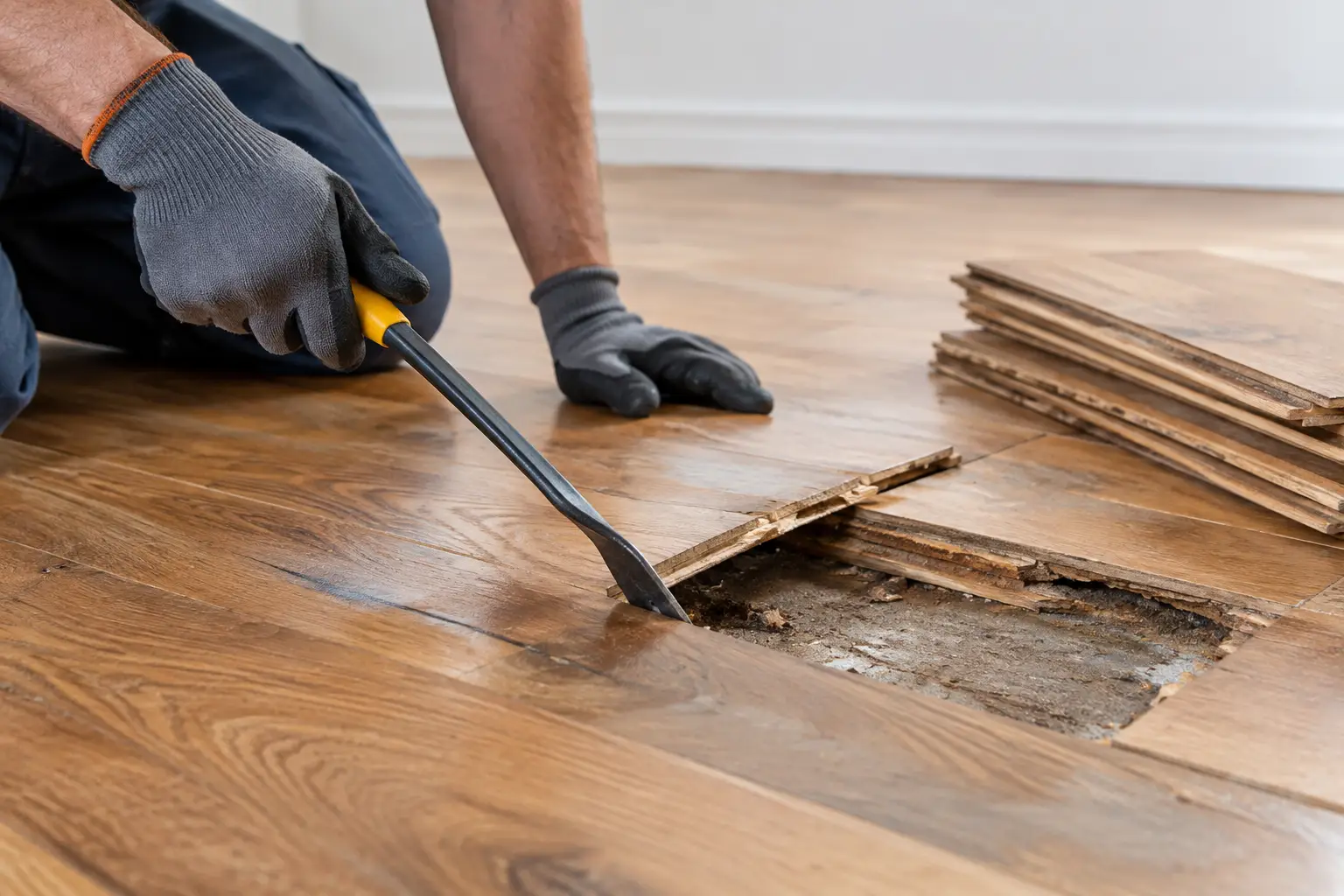
Removing a damaged hardwood board is precision work. The board is surrounded by flooring that may be perfectly good, and an inexperienced attempt to remove one damaged board can easily turn it into several damaged boards.
Hardwood flooring is typically manufactured with tongue-and-groove edges that connect adjoining boards. Cutting and removing a board without understanding how those pieces fit together can damage the tongue, groove or surface of the neighboring hardwood.
This is one of the problems with attempting this type of repair without the proper knowledge. The objective isn't simply to get the damaged board out. It is to remove it without creating another repair around it.
National Floors carefully removes the damaged material while protecting as much of the surrounding hardwood as possible.
How Replacement Hardwood Boards Are Installed
Once the damaged material has been removed, the replacement hardwood needs to be fitted into an existing floor that was originally assembled as a connected system.
National Floors considers the species, width, thickness, grade and grain characteristics of the existing flooring when selecting replacement material. Older Bay Area homes can present an additional challenge because some flooring dimensions and profiles are no longer commonly stocked.
The method used to secure a replacement board depends on the floor and location of the repair. Some boards can be face-nailed where appropriate. Adhesive can also be used when creating a seamless repair without visible fasteners.
The replacement material should also be properly acclimated before installation when required. Hardwood responds to the environment around it, and the condition of the replacement material matters before it becomes part of the existing floor.
Even when the species, dimensions and grade are correct, new hardwood may not initially look identical to flooring that has been in a home for decades. Wood changes through age, sunlight, oxidation and previous finishes.
That is exactly why the next part of the repair is so important.
Replacing the Board Is Only Half the Repair
On a hardwood floor that was finished on site, National Floors requires the entire connected room to be sanded and finished if the homeowner wants professional results.
This isn't an upsell. It is what is required to properly blend the repair.
The existing hardwood has aged. Its finish has changed through sunlight, oxidation, cleaning, traffic and normal wear. A newly installed board does not have that history.
If we sand and finish only the replacement board and a small area around it, we are trying to blend a brand-new finish into an older finished surface. Even when the wood species and stain color are correct, differences in color, sheen and appearance can remain visible.
You may have successfully replaced the damaged board, but you can still see where the repair was made.
That does not meet the National Floors standard.
By sanding and refinishing the entire room, both the replacement boards and the existing hardwood are brought back to a clean canvas. The floor can then receive the same stain, sealer and finish system together.
The objective isn't simply to install a new board. The objective is to make you stop looking for where the damaged board used to be.
National Floors backs qualifying refinishing workmanship with our 2-year hardwood floor sanding and refinishing workmanship warranty.
Why National Floors Doesn't Spot Refinish Finished-on-Site Hardwood
We occasionally receive calls from homeowners who want one damaged board replaced and only the immediate repair area refinished.
On hardwood flooring that was finished on site, National Floors does not consider that a professional repair.
Imagine repairing body damage on a ten-year-old car and painting only the repaired section. Even if you have the original paint code, the surrounding paint has spent ten years exposed to sunlight and the environment. Matching the original formula does not guarantee that the new paint will disappear into the old paint.
A hardwood floor presents the same basic problem.
The existing finish has aged. The wood itself may have changed color. The sheen has experienced years of traffic and cleaning. Trying to reproduce all of that within a small repair area is not the same as sanding the room and finishing everything together.
For finished-on-site hardwood, professional sanding and refinishing of the entire connected room is the method National Floors uses when a board replacement needs to properly blend.
Installation Workmanship Matters Too
A replacement board needs to do more than look right. It needs to remain securely installed and perform with the surrounding hardwood.
National Floors evaluates how the original flooring was installed, the condition of the subfloor and the appropriate method for securing the replacement material before completing the repair.
When qualifying hardwood installation work is performed by National Floors, homeowners can also review our 2-year hardwood flooring installation workmanship warranty.
Engineered Hardwood Changes the Equation
Engineered hardwood needs to be evaluated differently from solid flooring.
Its visible hardwood surface is a wear layer attached to other material underneath. Some engineered floors have enough usable hardwood to tolerate sanding. Others have such a thin wear layer that sanding risks permanently damaging the flooring.
The installation method matters too. Engineered flooring may be nailed, glued or floated depending on the product and subfloor.
Before recommending repair and refinishing, National Floors needs to determine what type of flooring is installed, how it was installed and what can safely be done to it.
Replace a Few Boards or Replace the Entire Floor?
This is often the real question homeowners are trying to answer.
If damage is isolated and the surrounding hardwood is structurally sound, selective board replacement followed by professional refinishing may preserve most of the original floor.
If damage is widespread, the floor has insufficient thickness remaining, an engineered wear layer cannot be safely sanded, or the underlying structure has serious problems, more extensive replacement may make better financial sense.
National Floors does not start with the assumption that everything needs to come out.
Genuine hardwood has value. If most of it can be preserved and restored to a professional standard, saving the existing floor deserves serious consideration before paying to replace it.
Don't Judge the Entire Floor by Its Worst Board
One ugly board can dominate everything you see when you walk into a room. Several damaged boards can make an otherwise restorable hardwood floor look hopeless.
But appearance alone doesn't tell us whether the entire floor needs replacement.
National Floors evaluates the damaged boards, surrounding hardwood, remaining floor thickness and cause of the problem before recommending what should be done. If the damaged material can be replaced and the remaining floor can be professionally sanded, you may be able to keep the majority of the genuine hardwood already in your home.
Before paying to tear out an entire hardwood floor, find out how much of it actually needs to go.
See how National Floors repairs, sands and refinishes hardwood floors throughout the Bay Area.