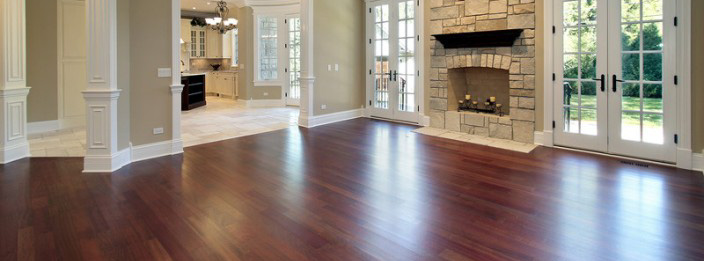

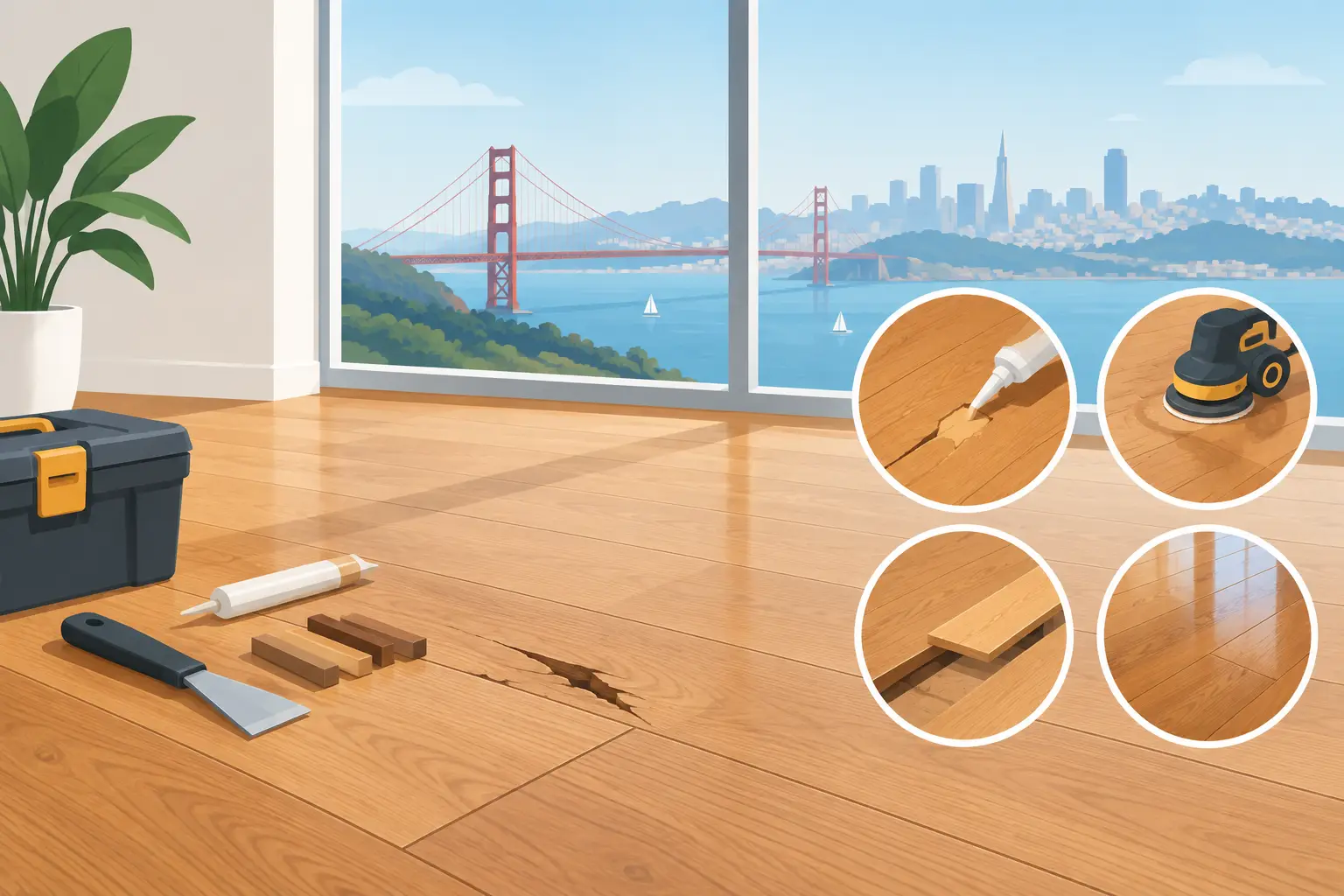
The right solution depends on what caused the damage and how deeply it extends into the wood. Sometimes refinishing is enough. Other floors need individual boards replaced, damaged sections repaired or new hardwood added to an existing floor.
The first step is determining what can be saved.
1. Sanding and Refinishing Worn Hardwood Floors
If the boards themselves are sound but the surface is scratched, dull or discolored, sanding and refinishing may be all that is needed.
Professional sanding removes the old finish along with many scratches, surface stains and signs of normal wear. The bare wood can then be left natural or stained to change the color before new protective finish is applied.
Solid hardwood can often be refinished multiple times during its life. Engineered hardwood requires more caution because the usable wood layer can be considerably thinner.
Before sanding, the floor should be evaluated to determine whether enough usable wood remains.
2. Resurfacing Floors With Lighter Wear
Not every hardwood floor needs to be sanded down to bare wood. If the existing finish is still intact and the damage is primarily light surface wear, resurfacing may be an option.
The existing surface is prepared so a compatible new finish can bond properly. This can renew protection without removing unnecessary wood from the floor.
Resurfacing will not remove deep scratches, pet stains, water damage or discoloration that has penetrated into the wood. When damage extends below the finish, full sanding or repair may be necessary.
3. Replacing Individual Damaged Boards
A damaged section does not necessarily mean the entire floor needs replacement.
Individual boards can often be removed and replaced when damage is limited to one area. This is commonly done for:
- Deeply damaged or broken boards
- Pet-stained areas
- Water-damaged flooring
- Termite-damaged boards
- Previous repairs that were poorly performed
The challenge is making the repair blend with the existing floor. Species, board width, grain and age all affect the appearance.
When appropriate, the repaired area and surrounding floor can then be sanded and refinished together. This helps bring the old and replacement wood closer in color and sheen.
4. Repairing Water-Damaged Hardwood Floors
Water can cause staining, cupping, swelling and permanent damage to hardwood flooring. Before repairing the floor, the source of the water must be corrected and the affected area allowed to dry.
This is important because sanding a floor while the wood is still distorted by excess moisture can create additional problems later.
Once conditions have stabilized, the floor can be evaluated. Some water-damaged floors can be sanded and refinished. Other areas may require damaged boards to be replaced before refinishing.
Dark water stains can also penetrate deeply into hardwood. Sanding may improve them considerably, but some stains extend too far into the wood to disappear completely. In those situations, board replacement may produce a better result.
5. Repairing Termite-Damaged Flooring
Termites can damage hardwood flooring from underneath, sometimes leaving the visible surface looking relatively normal until the wood becomes weak.
The termite problem should be treated by the appropriate pest-control professional before flooring repairs begin. Once the infestation has been addressed, National Floors can evaluate the flooring damage and replace affected hardwood where practical.
If surrounding hardwood remains in good condition, repairing the damaged section may preserve most of the original floor rather than replacing everything.
6. Repairing Cupped or Crowned Hardwood
Cupping occurs when the edges of a hardwood board rise higher than the center. Crowning produces the opposite shape, with the center higher than the edges.
These conditions are often related to moisture and should not automatically be corrected by sanding.
The moisture source needs to be identified and corrected first. The flooring should then be given sufficient time to stabilize before deciding whether sanding, board repair or replacement is appropriate.
Patience matters. Sanding a moisture-affected floor too soon can permanently alter the boards after they eventually dry.
7. Adding Hardwood to an Existing Floor
Floor repair sometimes involves putting wood back where it was never installed before.
Removing a wall, fireplace hearth, cabinet or other feature can leave an unfinished opening in an otherwise good hardwood floor. In many cases, matching hardwood can be installed and integrated into the existing flooring.
Depending on the layout, new boards can be carefully fitted or woven into the surrounding floor. Sanding and refinishing the larger area afterward can help blend the addition with the original hardwood.
This can preserve an existing floor while allowing homeowners to update the layout of the room.
8. When Replacement Really Is Necessary
We believe in saving hardwood when it makes sense, but not every floor should be repaired.
Replacement may be appropriate when:
- Damage affects a large percentage of the floor.
- The flooring has already been sanded too thin.
- An engineered floor does not have enough usable wood for refinishing.
- Water or other damage has severely compromised the flooring.
- The homeowner wants an entirely different species, width or floor design.
A worn-looking floor should not automatically be placed in this category. Some old Bay Area hardwood floors look terrible before sanding and beautiful afterward.
Repair First or Replace?
There is no single answer based on appearance alone. The floor needs to be inspected.
At National Floors, we evaluate the condition of the existing hardwood and explain the practical options. Depending on the floor, that may mean resurfacing, sanding and refinishing, replacing individual boards, adding matching hardwood or replacing flooring that can no longer be reasonably restored.
National Floors is a licensed, bonded and insured California C-15 Flooring and Floor Covering contractor serving the Bay Area.
And we do not require a deposit. Payment is due after the work is completed.
Before assuming an old or damaged hardwood floor needs to be torn out, find out what can be saved. Hardwood is remarkably repairable, and sometimes the best floor for your home is the one you already have.
