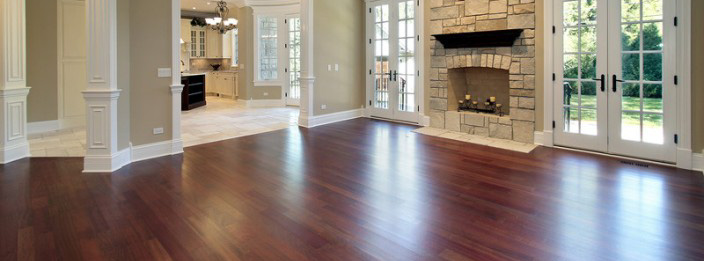

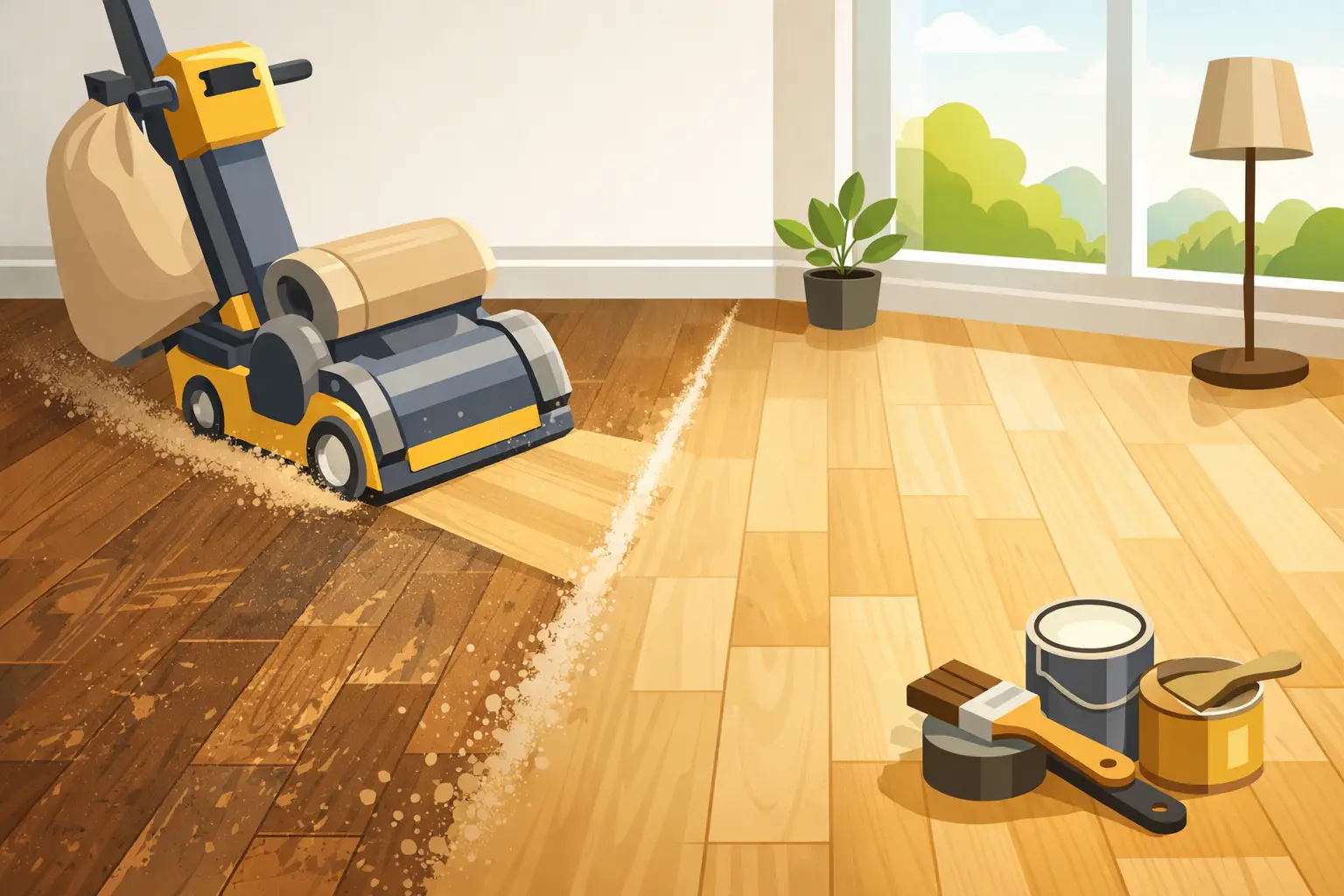
In many cases, professional floor sanding can remove the damaged surface and expose clean hardwood underneath. Once properly sanded, the floor can be stained if a color change is desired and protected with a new professional finish system.
The important question is whether the existing hardwood is still a good candidate for restoration. Flooring construction, remaining thickness, previous sanding, water damage, repairs and structural condition all need to be considered before sanding begins.
What Professional Floor Sanding Actually Does
Hardwood floor sanding removes the existing coating along with a controlled amount of wood from the surface of the floor.
The objective is not to remove as much hardwood as possible. A professional sanding job removes only the amount necessary to eliminate the old finish, correct surface damage and produce a properly prepared hardwood surface.
Sanding is performed through several stages using progressively finer abrasives. The initial sanding removes the existing finish and begins correcting surface irregularities. Additional sanding stages remove the scratches left by the previous abrasive until the hardwood reaches the condition required for staining and finishing.
The perimeter of the room requires separate equipment because the primary sanding machine cannot reach all the way to walls, corners and other fixed areas. These areas need to be carefully blended with the main field of the floor so that edges, sanding marks and transitions do not become visible after the finish is applied.
Professional dust-control equipment also captures a substantial amount of the sanding dust as it is produced. Hardwood floor sanding is still construction work, but modern equipment makes the process considerably cleaner than the sanding methods many homeowners remember from years ago.
When Hardwood Floor Sanding Can Save the Floor
Traditional solid hardwood is an excellent candidate for restoration because the board contains a substantial amount of usable hardwood above the tongue and groove.
A floor that looks severely worn from the top may still have decades of useful life remaining underneath the damaged surface.
Sanding and refinishing may be appropriate when hardwood has widespread scratches, worn traffic areas, damaged finish, surface discoloration, shallow dents or an outdated stain color.
Even floors with isolated damaged boards can often be saved. The damaged flooring can be repaired or replaced before the entire area is sanded and refinished.
This ability to restore rather than replace is one of the major advantages of genuine hardwood flooring.
Engineered Hardwood Requires a Closer Look
Engineered hardwood can sometimes be sanded and refinished, but it should never be assumed that every engineered floor is suitable.
Unlike solid hardwood, engineered flooring has a limited layer of genuine hardwood over its underlying core. The thickness of that wear layer varies considerably between products.
Before sanding engineered hardwood, National Floors determines how much actual hardwood is available. We generally want approximately 3 mm or more of usable hardwood before considering a complete sanding and refinishing process. Previous sanding and the overall condition of the flooring also need to be considered.
Sanding through the hardwood wear layer exposes the material underneath and can permanently damage the floor. This is why engineered flooring needs to be evaluated before any sanding equipment is used.
Laminate Flooring Cannot Be Sanded
Laminate flooring is sometimes mistaken for engineered hardwood, but the two products are very different.
Engineered hardwood has genuine wood on its surface. Laminate uses a manufactured decorative surface designed to resemble hardwood.
Because there is no usable hardwood surface to expose, laminate cannot be sanded and refinished. Sanding would destroy the decorative layer.
Correctly identifying the flooring is therefore one of the first steps when determining whether restoration is possible.
Some Hardwood Floors Need Repairs Before Sanding
Not every damaged hardwood floor should immediately be sanded.
Loose boards, severe cupping, buckling, termite damage and significant water damage indicate problems that need to be addressed first.
For example, termite-damaged hardwood flooring may have boards that have lost structural integrity. Sanding the surface cannot restore wood that has been substantially damaged underneath.
Deep gouges, pet damage, broken boards and localized areas of deterioration may also require board replacement before refinishing. Our hardwood floor repair guide explains several situations where damaged flooring can be repaired instead of completely replaced.
Once the necessary repairs are complete, sanding the larger area can help blend replacement boards into the surrounding hardwood and produce a much more uniform finished appearance.
Water-Damaged Hardwood Should Not Be Sanded Too Soon
Moisture problems require a different approach because sanding cannot correct the source of the damage.
When hardwood absorbs moisture from underneath, the edges of the boards can rise higher than their centers. This condition is known as cupping.
Sanding a severely cupped floor flat while excessive moisture is still present can cause permanent problems. As the hardwood eventually dries and changes shape, the center of the board can become higher than the edges.
Before sanding moisture-damaged hardwood, the source of the water needs to be identified and corrected. The flooring and surrounding structure should then be allowed to stabilize before deciding which boards can be saved and which require replacement.
Only after the moisture condition has been addressed should the final decision about sanding be made.
Preparation Determines the Quality of the Finished Floor
The stain color and finish sheen may be what homeowners notice when the project is complete, but much of the quality of a refinishing job is determined before either product is applied.
Loose boards, protruding fasteners, damaged flooring and necessary repairs need to be identified before the final sanding stages.
Old coatings and contamination also matter. Wax, oils and inappropriate cleaning products can interfere with stain and finish performance if they are not properly addressed.
Each sanding stage also affects the next. Skipping abrasive stages or sanding unevenly can leave scratches and imperfections that become much more obvious after stain is applied.
A properly prepared hardwood floor provides the foundation for everything that follows.
Changing the Color During Floor Sanding
Once the existing finish has been removed, homeowners have an opportunity to completely change the appearance of the hardwood.
The floor can remain natural or be stained to create a different color. The hardwood species plays an important role because different woods absorb stain differently.
Oak provides considerable flexibility when staining. Other species, including maple, require more care because their grain structure can produce different results.
Color samples should therefore be evaluated with the actual hardwood species in mind. A stain chart provides a useful starting point, but the finished color will be influenced by the species, grain pattern, sanding preparation and natural variation within the floor.
Natural characteristics such as mineral streaks and differences between individual boards remain part of the finished floor. Those variations are part of genuine hardwood rather than defects that sanding is intended to eliminate.
Protecting the Hardwood After Sanding
After the sanding and any staining are complete, the hardwood needs a protective finish.
National Floors uses professional water-based finish systems designed to provide durable protection while allowing the appearance of the newly sanded or stained hardwood to remain the focus.
Water-based systems also provide faster drying times and lower VOC levels than many traditional solvent-based finishes. The specific drying and curing instructions provided for the finish should always be followed before replacing furniture, rugs or returning the room to normal use.
Dry and cured do not mean the same thing. A floor may accept careful foot traffic before the finish has reached its full cure.
Why Floor Sanding Is Not a Good DIY Experiment
Floor sanding machines can be rented, but access to the equipment does not make hardwood sanding a simple project.
A professional floor sanding machine removes hardwood very quickly. Stopping in the wrong place, using the wrong abrasive sequence or failing to maintain proper movement can create depressions and stop marks in the flooring.
Edges can also be sanded lower than the main floor, leaving a visible difference around the perimeter of the room.
These mistakes become especially noticeable when stain is applied because darker colors can emphasize sanding inconsistencies rather than hide them.
More importantly, every unnecessary sanding pass removes hardwood that can never be put back. An overly aggressive sanding job can reduce the number of times that floor can be restored in the future.
How to Help a Restored Hardwood Floor Last
Once a hardwood floor has been restored, everyday maintenance has a significant effect on how long the new finish lasts.
Fine dirt and grit act like abrasive material underneath shoes. Regular sweeping or vacuuming and good entrance mats help prevent those particles from continuously wearing against the finish.
Furniture should have protective felt pads, and spills should be cleaned promptly. Hardwood should never be soaked during cleaning.
Our hardwood floor care guide provides additional information about cleaning, furniture protection and preventing premature wear.
The objective is to protect the finish before traffic begins wearing directly against the hardwood underneath.
Find Out Whether Your Hardwood Can Be Saved
A scratched, faded or badly worn hardwood floor does not automatically need to be removed.
Many floors that initially appear to be at the end of their life still have enough usable hardwood to be repaired, sanded and refinished.
National Floors is a California C-15 licensed hardwood flooring contractor specializing in professional floor sanding, staining, refinishing and repairs throughout the San Francisco Bay Area. We complete more than 100 hardwood floor refinishing projects in a typical year and work with both solid and engineered hardwood flooring.
Before deciding to replace an existing hardwood floor, have its construction, condition and remaining thickness evaluated. The hardwood already in the home may have far more useful life remaining than its worn surface suggests.
