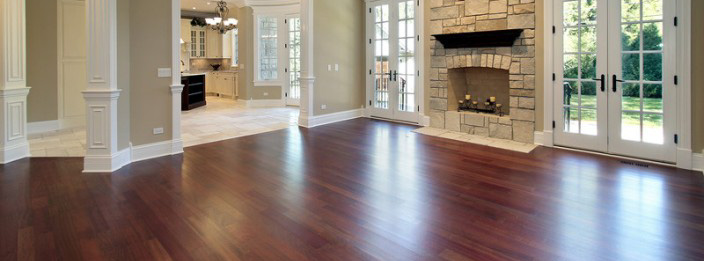

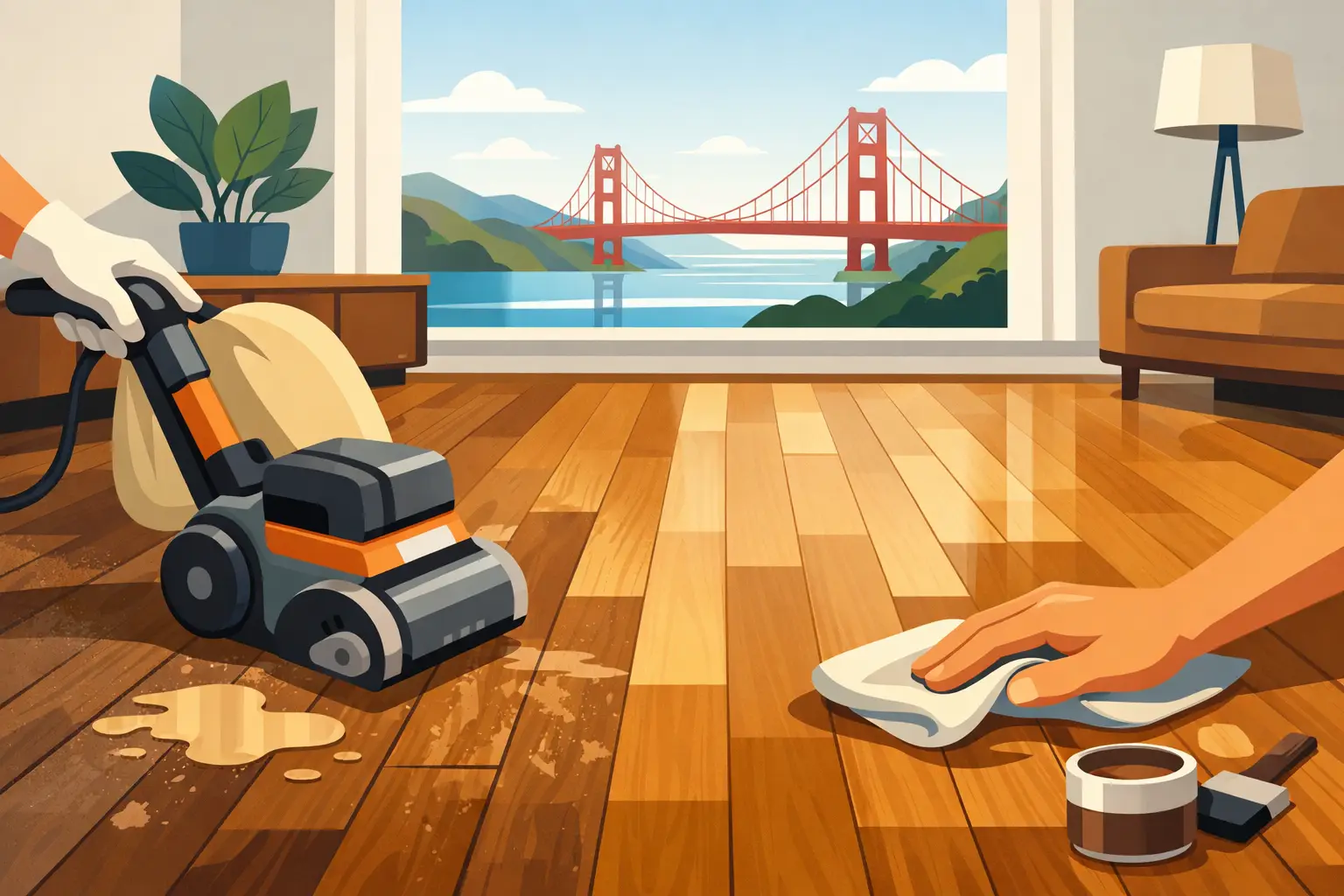
One of the greatest advantages of genuine hardwood flooring is its ability to be restored. Depending on the construction and condition of the floor, repairs, sanding, staining and refinishing can often preserve the existing hardwood and return it to a remarkably close-to-new appearance.
The important first step is determining exactly what type of floor you have and what condition it is in before deciding how it should be restored.
Start With the Floor You Actually Have
Before discussing stain colors or finish sheen, we first need to identify the flooring itself.
Traditional solid hardwood is manufactured from a single piece of wood. Because there is substantial usable hardwood above the tongue and groove, many solid hardwood floors can be sanded and refinished multiple times during their service life.
Engineered hardwood is different. It has a layer of genuine hardwood over a layered core. The thickness of that hardwood wear layer varies considerably from one product to another.
Some engineered hardwood floors contain enough usable wood to be professionally sanded and refinished. Others have a very thin wear layer and should not be conventionally sanded. Before refinishing engineered flooring, the amount of actual hardwood available needs to be determined.
Laminate and luxury vinyl plank are entirely different products and cannot be sanded and refinished like genuine hardwood. If the flooring type is uncertain, identifying it correctly is the first part of determining whether restoration is possible.
Match the Restoration to the Condition of the Floor
Hardwood floor restoration is not a single procedure. A floor with a worn protective coating may need something entirely different from a floor with deep scratches, water damage or broken boards.
The objective is to perform the amount of work the floor actually needs without unnecessarily removing usable hardwood.
When a Recoat May Be Enough
If the hardwood itself remains in good condition and the wear is limited primarily to the protective finish, complete sanding may not be necessary.
A professional recoat prepares the existing finish so another compatible protective coat can be applied. This can extend the life of a hardwood floor without removing the wood surface underneath.
There are limits to what a recoat can accomplish. It will not remove deep scratches, gouges, damaged stain, significant discoloration or damage that has penetrated into the wood.
The distinction is important: a recoat renews the protective finish. Sanding and refinishing renews the wood surface.
When Full Sanding and Refinishing Is Appropriate
When scratches extend into the hardwood, the finish has worn completely through, the existing stain needs to be removed or the floor has widespread surface damage, complete sanding and refinishing may be the better solution.
Professional sanding removes the old finish along with a controlled amount of damaged wood. The floor is sanded through progressively finer stages until a clean, smooth hardwood surface is produced.
This is where experience becomes particularly important. The objective is not to remove as much wood as possible. It is to remove enough material to properly restore the floor while preserving as much usable hardwood as possible for the future.
When Hardwood Floor Repairs Need to Come First
Sanding and finish cannot correct every problem.
Broken boards, loose flooring, termite damage, severe gaps, damaged subflooring and water-damaged hardwood floors may require repairs before refinishing begins.
Individual damaged boards can often be removed and replaced rather than replacing an entire room. The objective is to find compatible wood and integrate the repair as closely as possible with the existing flooring. Our hardwood floor repair guide explains several situations in which damaged flooring may still be saved.
Once the necessary repairs have been completed, sanding and refinishing the surrounding floor can help blend the repaired areas into the existing hardwood.
Water Damage Must Be Addressed Before Restoration
Moisture changes the restoration process because the source of the problem has to be corrected before the appearance of the floor becomes the priority.
Hardwood can absorb moisture from plumbing leaks, appliances, wet mopping, crawl spaces, concrete slabs and exterior water intrusion. Depending on the amount of moisture and how long the flooring remains wet, boards may stain, cup, crown, buckle or separate.
Dark surface staining can sometimes be reduced or removed during sanding. Deeper staining may penetrate too far into the hardwood to disappear completely.
Cupped flooring requires particular caution. Sanding a cupped floor flat before the wood has properly dried and stabilized can create another problem as the boards change shape during the drying process.
The proper sequence is to identify the moisture source, correct it, allow the flooring and surrounding structure to stabilize, repair what cannot be saved and only then determine whether sanding and refinishing are appropriate.
Plan the Restoration Before the Sanding Begins
A hardwood floor assessment should look beyond what is visible from across the room.
National Floors evaluates the hardwood species, flooring construction, previous sanding, existing finish, damaged boards, stains, moisture concerns and the amount of usable hardwood remaining.
Connected rooms also need to be considered. Refinishing only one section of a continuous hardwood floor can leave an obvious difference in color and sheen between the restored area and the older flooring.
These decisions are much easier to make before furniture is moved and the sanding equipment arrives.
Choosing a Hardwood Floor Stain
Once the existing finish has been removed, homeowners have the opportunity to completely change the appearance of the hardwood.
The floor can remain natural or be stained lighter, medium or dark depending on the hardwood species and the desired appearance.
Species identification is particularly important when stain is involved. Different hardwood species absorb stain differently. A color that looks one way on oak can look considerably different on another species.
For that reason, stain samples should be evaluated on the actual type of hardwood being refinished rather than relying solely on a photograph or color chart.
Natural grain patterns, mineral streaks and variation between individual boards will also remain visible after staining. Those characteristics are part of genuine hardwood and contribute to the final appearance of the floor.
What Happens During Hardwood Floor Restoration?
A complete restoration generally begins with removing furniture and preparing the work area. Loose or damaged flooring is identified and necessary repairs are completed before the final sanding stages.
Professional sanding equipment then removes the old coating and damaged wood surface. Several progressively finer sanding stages are used rather than attempting to remove everything in a single aggressive pass.
Edges and corners require separate equipment and must be blended with the main field of the floor. Wood filler may be used where appropriate for nail holes, hairline cracks and minor imperfections before the final sanding stages.
After sanding is complete, the hardwood is thoroughly cleaned and prepared. If a color change is desired, stain is applied before the protective finish system.
National Floors uses professional water-based finish systems that provide durable protection while offering faster drying and lower VOC levels than many traditional solvent-based alternatives.
Drying and Curing Are Not the Same Thing
One of the most important things homeowners should understand after refinishing is the difference between drying and curing.
A finish can become dry enough for limited foot traffic before it has reached its full cure.
Furniture should be placed carefully according to the instructions provided for the finish system being used. Furniture should never be dragged across a newly refinished floor.
Area rugs may need to remain off the floor longer because covering a finish before it has sufficiently cured can interfere with the curing process.
Following the proper schedule after refinishing protects the work that was just completed.
Avoid Shortcuts That Can Permanently Damage Hardwood
Hardwood sanding is not simply a matter of renting a large sanding machine and moving it across the floor.
Improper sanding can leave drum marks, waves, stop marks, low edges and other defects that become even more visible once stain and finish are applied.
Every sanding removes some of the hardwood. Mistakes therefore do more than affect appearance; they can unnecessarily reduce the amount of usable wood remaining for future refinishing.
Engineered hardwood requires even greater caution because the usable hardwood layer can be much thinner than a traditional solid floor.
Moisture problems should never be hidden underneath a cosmetic restoration either. Cupping, buckling and repeated movement are warning signs that the cause needs to be identified before the floor is sanded.
Protect the Hardwood After Restoration
Once hardwood has been restored, relatively simple maintenance can help protect the new finish.
Regularly remove dirt and grit before it gets ground into the coating. Use entrance mats and felt pads underneath furniture, and clean spills promptly.
Avoid soaking hardwood floors with water. National Floors also recommends against steam mops and vinegar-and-water cleaning because moisture and inappropriate cleaning products can damage the floor or its protective finish. Our hardwood floor cleaning guide explains the cleaning methods we recommend.
The goal is to protect the finish so normal traffic wears against the coating rather than the hardwood underneath.
Restore the Hardwood Before Assuming It Needs Replacement
A hardwood floor can look badly worn long before it reaches the end of its useful life.
Scratches, discoloration, worn finish, damaged boards and an outdated color can often be addressed through a combination of repair, sanding, staining and refinishing.
National Floors is a California C-15 licensed flooring contractor specializing in hardwood floor restoration throughout the San Francisco Bay Area. Our crews complete more than 100 refinishing projects in a typical year, including solid hardwood, engineered flooring, repairs, staining, stairs and water-damaged floors.
Before removing an existing hardwood floor, have it evaluated. In many cases, the hardwood already in the home has many years of useful life remaining and can be restored instead of replaced.
