
In fact, it is against our company policy. Choosing a hardwood floor color is much like choosing a painting that will hang on your wall. Beauty is in the eye of the beholder. If you like it, then it is the right color for you.
What National Floors will do is make that decision considerably easier. We first determine whether your floor can be safely sanded, identify the wood species, explain which staining options are appropriate, help eliminate color families you don't like and then demonstrate your finalists directly on the freshly sanded hardwood.
By the time you make the final decision, you're no longer trying to imagine what a tiny sample might look like across an entire room. You're looking at the stain on your own floor.
First, Is Your Floor a Candidate for Sanding?
Before discussing stain colors, National Floors first determines whether the existing hardwood has enough usable wood remaining to be safely sanded. If the floor isn't a good candidate for sanding, the conversation about changing its stain color may end right there.
Solid hardwood can often be sanded multiple times during its life, but previous refinishing matters. A floor that has already been aggressively sanded may have less usable wood remaining.
Engineered hardwood requires even more caution. Some engineered floors have a thick enough hardwood wear layer to be sanded and refinished. Others have a very thin veneer. Sanding through that veneer can permanently damage the flooring and potentially turn a refinishing project into a complete floor replacement.
This is one reason refinishing engineered hardwood can be particularly risky as a DIY project. Before a sanding machine ever touches the floor, you need to know exactly what you're working with.
If you're unsure whether your existing floor can be saved, our Hardwood Floor Sanding and Refinishing Service starts with evaluating the floor and determining what can realistically be accomplished before unnecessary work is performed.
The Wood Species Comes Next
Once we know the floor can be sanded, we identify the wood species and determine whether staining is appropriate.
Red oak, white oak, maple and other hardwood species accept stain differently. Even two floors of the same species can produce noticeably different results because of age, grain, previous sanding, repairs and natural color variation.
The existing color of the wood matters too. Stain is not paint. The natural color and grain remain part of the finished appearance.
This is why National Floors does not promise that a color seen in a photograph, showroom sample or neighbor's house will look exactly the same on your floor. We would rather show you what is realistically achievable than sell you an expectation the wood cannot deliver.
We Will Guide You, But We Won't Choose Your Color
Although the final decision belongs to the homeowner, we don't simply hand you a stain chart containing dozens of colors and walk away.
Instead, National Floors helps narrow the field by talking about basic color tones:
- Reds
- Browns
- Golds
- White, gray and black tones
This makes the process much easier. A homeowner may immediately say, "I don't want anything with red in it." Great. We may have just eliminated a dozen stain choices in a few seconds.
Another customer may know they want something warmer but not particularly dark. That immediately points the conversation in another direction.
We keep narrowing the choices until the homeowner has a manageable group of colors worth demonstrating on the actual floor.
Professional Sanding Creates the Clean Canvas
Once we know the floor can be refinished and the customer has narrowed the stain choices, the existing finish is removed through professional sanding.
This is where the quality of the finished floor is really established.
Scratches, old coatings and surface discoloration must be removed so the stain can penetrate clean, exposed wood. Repairs should also be completed before staining whenever possible so replacement boards have the best opportunity to blend with the surrounding hardwood.
Poor sanding becomes especially obvious after stain is applied. Machine marks, uneven sanding and areas where old finish remains can absorb stain differently and become more noticeable rather than disappearing.
That is why changing the color of a hardwood floor is not simply a staining job. It is part of the complete National Floors sanding and refinishing process. A beautiful stain color cannot compensate for poor preparation underneath it.
We Demonstrate the Colors on Your Actual Floor
Once the hardwood has been properly sanded and we have a clean canvas, National Floors schedules a stain demonstration using the customer's narrowed-down choices.
Whenever possible, we choose a room with good natural lighting that represents how the floor will normally be seen. Lighting makes an enormous difference in how stain appears.
Put the same stain sample in a poorly lit room and even a relatively light color can appear considerably darker. A color chosen under those conditions may look completely different when carried into a bright kitchen, hallway or living room.

Testing the stain directly on the freshly sanded hardwood also reveals something a printed chart, photograph or computer screen cannot: what that stain actually looks like on the wood that is staying in your home.
Light, Medium or Dark Hardwood Stain?
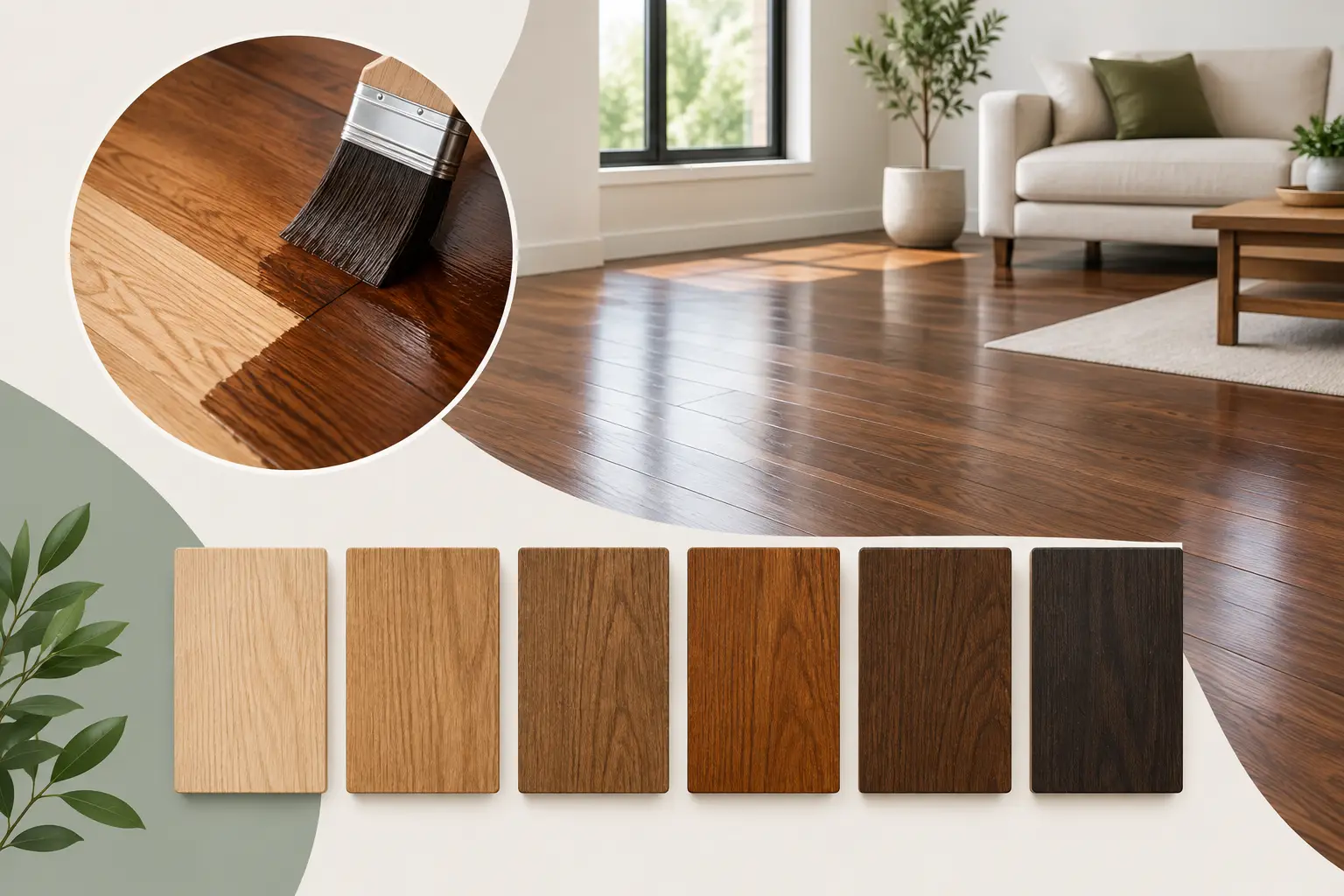
Natural and lighter colors preserve more of the wood's original character and generally make settling dust, minor scratches and everyday wear less noticeable.
Medium brown stains are versatile because they add warmth and richness while allowing the grain of the hardwood to remain prominent.
Dark stains can create dramatic contrast and completely transform an older floor, but they generally show dust, pet hair and scratches more readily.
Color can also change the way we perceive the size of a room. A very dark floor against light-colored walls creates a strong visual perimeter. That contrast can make the room appear smaller.
A lighter floor against lighter walls creates less contrast, allowing the floor and walls to visually flow together and often giving the room a more open appearance.
Think Beyond Today's Color Trend
Hardwood stain colors go through trends just like cabinets, countertops, furniture and paint colors.
Natural and traditional wood tones remain popular partly because they work with so many different decorating styles. More unusual colors can look spectacular in the right home, but they may also influence other design decisions.
The farther the floor moves from a natural wood appearance, the more you may need to consider wall colors, cabinets, furniture, trim and even the ceiling to make the entire room work together.
That doesn't make an unusual stain color wrong. Remember
