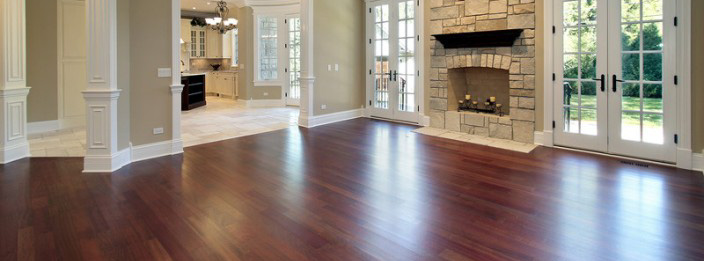

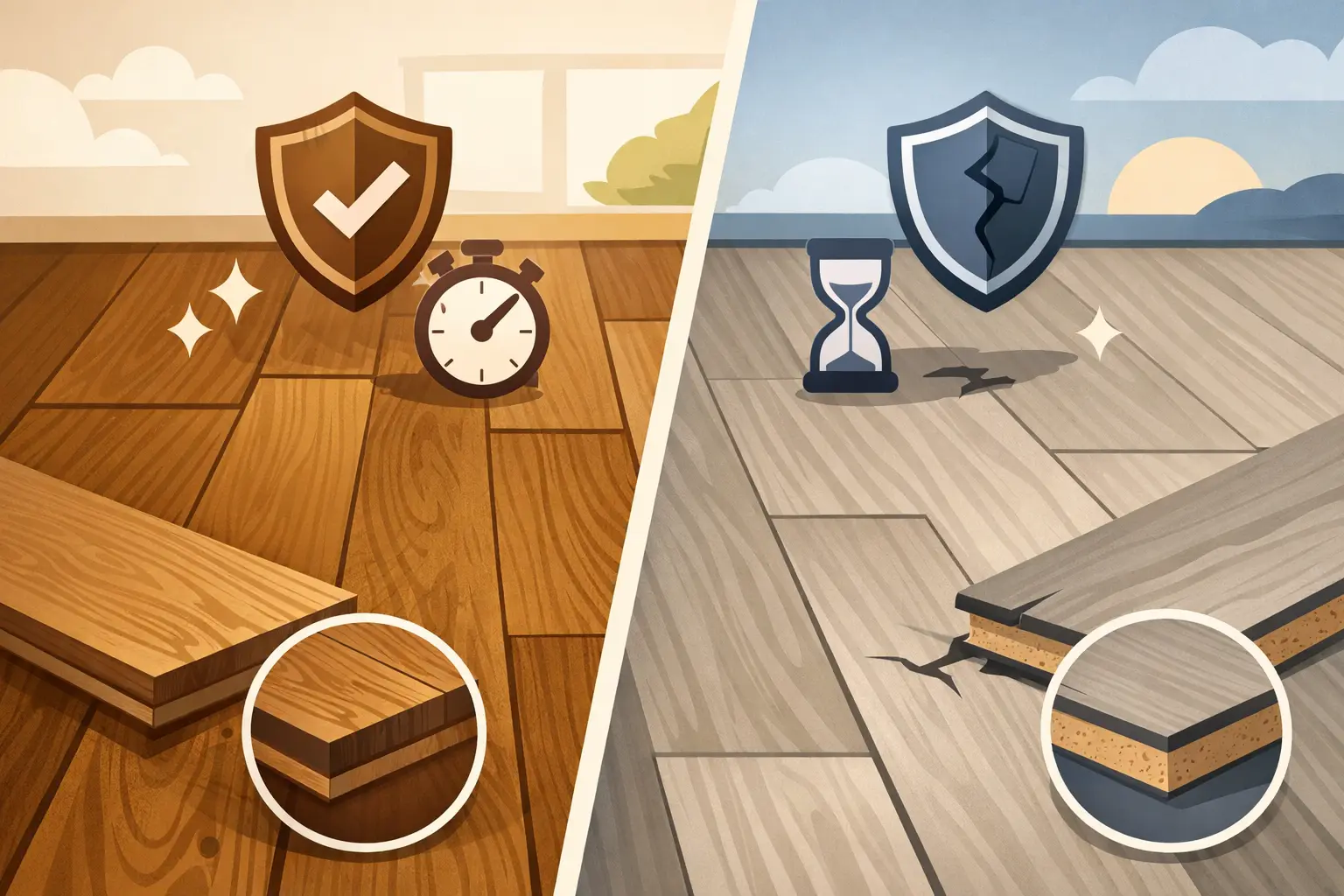
At National Floors, we describe solid hardwood as a “Forever Floor.” Properly cared for, a solid hardwood floor can last well over 100 years and serve multiple generations of homeowners. Laminate, on the other hand, is what we call a “One-Time Floor.” When its usable surface is finished, the floor itself is finished.
That difference completely changes the long-term cost comparison.
Hardwood Versus Laminate: What Is the Difference?
Solid hardwood flooring is real wood from the surface of the board to the bottom. Oak, maple and other hardwood species can be repaired, sanded and refinished as the surface wears, provided enough usable wood remains above the tongue and groove.
Engineered hardwood is also genuine wood flooring, but it is constructed differently. A real hardwood wear layer is bonded over a plywood or composite core. Some engineered floors have enough hardwood to be professionally sanded and refinished, while others have a wear layer too thin to safely sand. An engineered floor should always be evaluated before attempting to refinish it.
Laminate is fundamentally different. It is a manufactured flooring product with a decorative image designed to imitate wood, protected by a wear surface and generally installed over a fibreboard core.
Modern laminate can look very convincing. But the wood grain you see is an image. Once that surface is worn through or seriously damaged, there is no fresh wood underneath waiting to be restored.
Hardwood Is a Forever Floor
A properly installed solid hardwood floor is one of the few surfaces in a home that can realistically last for generations.
It is not unusual to encounter hardwood flooring that is 50, 75 or even more than 100 years old and still capable of being restored. Throughout older Bay Area communities, original hardwood floors remain in homes long after kitchens, bathrooms, roofs, windows and countless other parts of those homes have been replaced.
The reason hardwood can last so long is simple: wear does not necessarily mean the end of the floor.
When the finish becomes worn, the floor can be refinished. When individual boards are damaged, they can often be repaired or replaced. Scratches, discoloration, old stain and decades of surface wear can frequently be removed through professional sanding, followed by a new stain and protective finish.
Instead of throwing the floor away, you renew it.
There are circumstances where hardwood can be damaged beyond practical repair. Severe fire, flooding, extensive termite damage or structural deterioration can destroy a floor. A hardwood floor that has already been sanded too many times may also have insufficient material remaining for another complete refinishing.
But normal wear is not the end of a hardwood floor.
That is why National Floors calls solid hardwood a Forever Floor.
Laminate Is a One-Time Floor
Laminate works very differently.
Its appearance depends upon the original manufactured surface. Once that surface is deeply worn, chipped, swollen or damaged beyond repair, it cannot be sanded to expose fresh material and finished again.
You cannot refinish a photograph of wood.
Individual laminate planks can sometimes be replaced when matching material is still available. But flooring products change constantly. Years after the original installation, the same color, pattern, dimensions or locking system may no longer be available.
Eventually, when the laminate floor reaches the end of its useful life, there is no refinishing process that starts it over again.
The old floor must be demolished and another floor installed in its place.
That is why we call laminate a One-Time Floor.
The Upfront Savings Can Cost More Later
Laminate generally costs less to purchase and install than solid hardwood. If the only numbers being compared are today's material and installation prices, laminate can appear to be the obvious bargain.
But that comparison ends too soon.
When a laminate floor eventually wears out, the homeowner does not simply purchase another inexpensive floor.
First, the original floor has to be removed. That means paying for demolition and disposal. Then another complete floor must be purchased. Installation must be paid for a second time, and baseboards or other trim may need to be removed, replaced or repaired as part of the project.
In other words, the homeowner may eventually pay for two floors, two installations and the demolition of the first floor.
There is another factor that is easily overlooked: inflation.
The replacement floor will not be purchased at today's prices. Material, labor, disposal and installation costs decades from now may be substantially higher. What initially looked like a large savings can become a much greater expense over the life of the home.
Solid hardwood follows a different financial path. When its protective surface eventually wears out, the entire floor normally does not need to be demolished and replaced. The existing hardwood can often be sanded, repaired and refinished.
You are renewing an asset you already own rather than purchasing the entire floor again.
Finding Hardwood Under Carpet Can Be Like Striking Gold
Many older Bay Area homes were originally built with hardwood flooring that was later covered with carpet. Homeowners sometimes remove that carpet expecting to find an old floor that needs to be replaced and instead discover valuable original hardwood underneath.
The floor may look terrible at first. It may be scratched, discolored, dull or covered with decades of wear. None of those conditions automatically means the wood is finished.
In many cases, repairs and professional refinishing can reveal a beautiful hardwood floor that has already been in the home for generations and may remain there for generations more.
For a homeowner, discovering good original hardwood underneath old carpet really can be like striking gold.
Before covering an old hardwood floor with another product or tearing it out, find out what you already own.
Solid Hardwood and Engineered Hardwood Are Not the Same
The Forever Floor description applies most strongly to solid hardwood.
Solid hardwood contains substantially more usable wood than most engineered flooring. This gives a qualified flooring contractor greater ability to repair and refinish the floor throughout its service life.
Even solid hardwood cannot be sanded indefinitely. Every complete sanding removes some material, and eventually there may not be enough wood remaining above the tongue and groove for another full refinishing.
Engineered hardwood requires an even closer inspection. Some quality engineered floors have a substantial hardwood wear layer and can be professionally refinished. Others use extremely thin veneers that provide little or no margin for sanding.
Never assume an engineered floor can or cannot be sanded simply by looking at the surface. The construction and remaining wear layer need to be evaluated first.
What About Scratches, Dents and Everyday Wear?
Hardwood is not indestructible. Pets can scratch it. Furniture can dent it. High-traffic areas can wear through the finish. Sunlight can change its color, and years of normal family life will eventually leave evidence behind.
But this is precisely where hardwood demonstrates its advantage.
A floor does not have to remain perfect for 100 years in order to last 100 years. It lasts because it can be maintained and renewed along the way.
A badly worn hardwood floor can sometimes look beyond saving to a homeowner. After sanding removes the damaged surface and a new finish is applied, that same floor can look dramatically different.
With laminate, significant damage to the decorative surface cannot be corrected in the same manner. Once the manufactured surface is gone, refinishing is not an option.
Moisture Can Damage Either Floor
Neither hardwood nor laminate should be treated as though water cannot harm it.
Hardwood can cup, crown, stain or buckle after excessive moisture exposure. Before repairing or refinishing a moisture-damaged hardwood floor, the source of the moisture needs to be identified and corrected.
Plumbing leaks, flooding, moisture from below the floor and other conditions cannot simply be hidden beneath another coat of finish. Correct the cause first, then determine what can be saved.
Laminate has its own vulnerability. If water penetrates the joints and reaches the fibreboard core, the material can swell. Once this happens, the damaged area generally cannot be sanded flat because sanding would destroy the decorative surface.
Whichever flooring you own, proper maintenance matters. Use mats at exterior doors, place felt pads beneath furniture, clean spills promptly and avoid saturating the floor during cleaning.
When Does Laminate Make Sense?
Laminate is not automatically a poor flooring choice. There are situations where its lower initial cost makes sense.
It may be appropriate for a budget-conscious renovation, rental property, temporary update or situation where the homeowner wants the appearance of wood without making the investment in genuine hardwood.
The important thing is to understand what you are buying.
If the objective is an affordable floor for a limited period, laminate may serve that purpose very well. If the objective is a floor that could remain in the home for the next generation, solid hardwood belongs in a completely different category.
Does Hardwood Add More Long-Term Value?
When genuine hardwood already exists in a home, preserving it can make considerable financial sense.
Natural hardwood is not simply a decorative covering. It is a repairable building material. Grain, color and character exist throughout the wood rather than being printed onto its surface.
An older oak floor may look scratched, orange, dull or badly dated before refinishing. Sanding and applying a new stain or natural finish can completely transform its appearance without throwing away the original floor.
This is particularly important when preparing an older home for sale. Removing genuine hardwood and replacing it with a manufactured imitation may eliminate an original feature that could have been restored instead.
Hardwood Versus Laminate: Which Lasts?
If the question is which flooring has the greater potential to last, solid hardwood wins by a very large margin.
Laminate is a One-Time Floor. Eventually its manufactured surface wears out. When that happens, replacement means demolition, disposal, another flooring purchase, another installation and potentially additional baseboard and trim work.
Solid hardwood is a Forever Floor. When its surface becomes worn, the floor itself does not necessarily need to be replaced. It can often be repaired, sanded and refinished for another generation of use.
At National Floors, we have spent decades sanding, repairing and refinishing hardwood floors throughout the Bay Area. We have seen floors endure children, pets, furniture, tenants and generations of everyday use. A hardwood floor can look terrible on the surface and still have decades of useful life remaining underneath.
Before covering an old hardwood floor or tearing it out, have it evaluated by a qualified hardwood flooring contractor. The floor you already own may be worth far more than you realize.
Hardwood is a Forever Floor. Properly cared for, it is not simply a floor you purchase. It is a floor you can pass on to the next generation.
