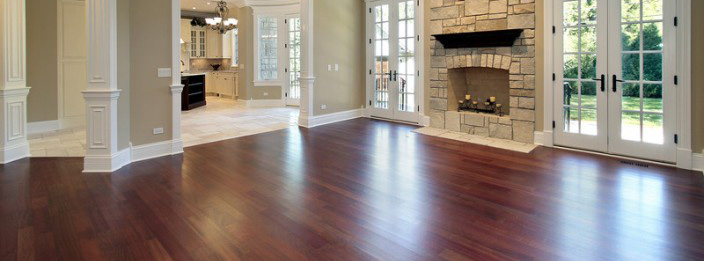

Grain, natural color, hardness, stain response, and price can all influence which one is right for your home. And if you already have oak flooring, there's another question worth asking before you start shopping for something new: Do you really need a different floor, or do you simply want your existing floor to look different?
At National Floors, we see older oak floors that homeowners assume need to be replaced. Once we sand away decades of old stain and finish and expose the original wood, that opinion can change pretty quickly.
Red Oak vs. White Oak: What Will You Actually Notice?
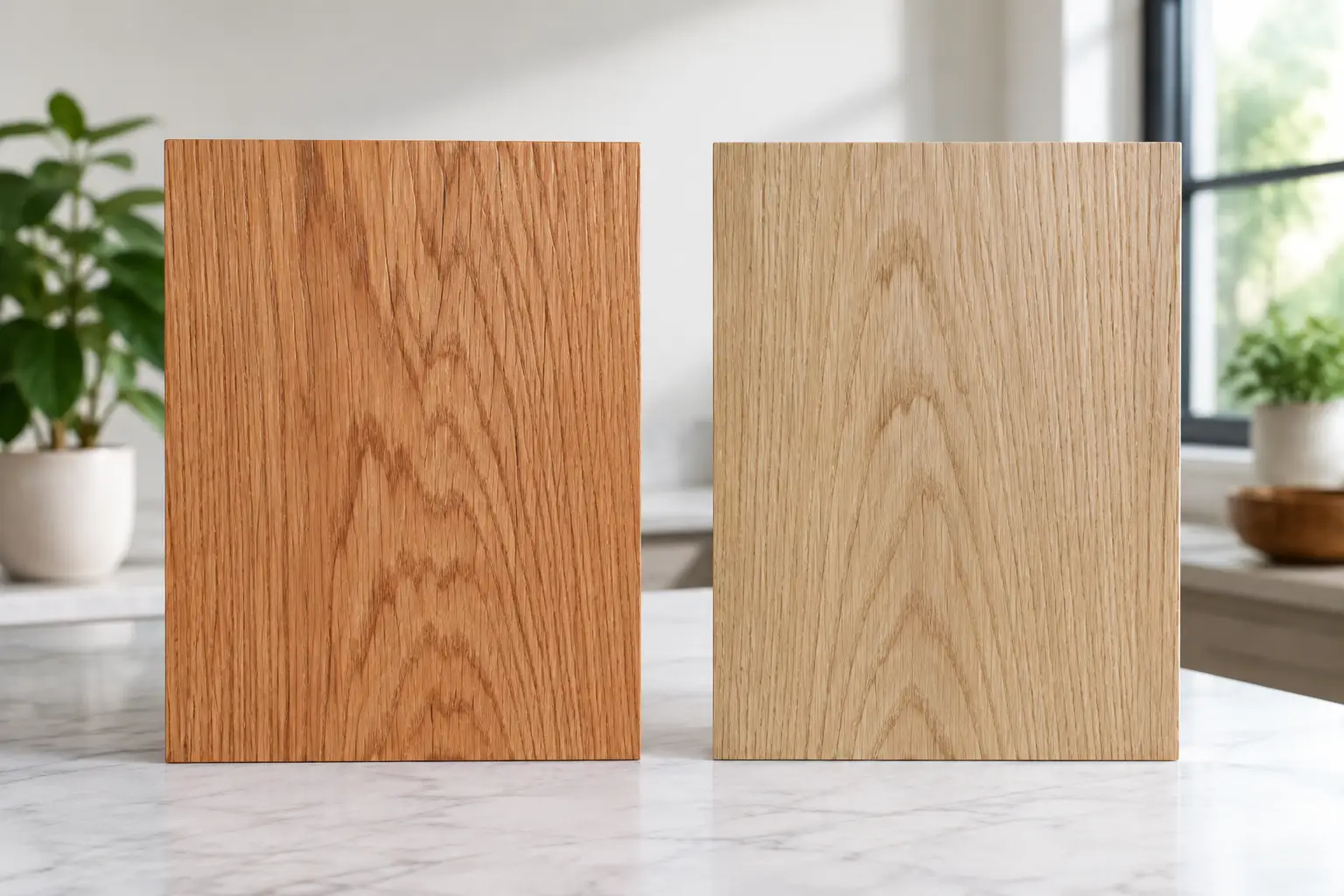
Put red oak and white oak side by side and one of the first differences you'll notice is the grain. Red oak has a wider, more pronounced grain, while white oak tends to look tighter and a little more uniform.
There's a reason for that. Red oak is a faster-growing tree. Look closely at a red oak floorboard and you'll see that the rays of the wood grain are wider and farther apart. White oak grows more slowly, so those rays are tighter and closer together.
Growth rate also affects hardness. The faster a tree grows, the softer the wood; the slower it grows, the harder the wood becomes. That's why white oak is harder than red oak. White oak is around 1,350 on the Janka hardness scale, while red oak is around 1,220.
Natural color is different too. Red oak usually has warmer pink, salmon, or reddish undertones. White oak is generally a little darker with more tan and brown tones. Despite the names, red oak isn't necessarily red and white oak certainly isn't white.
Neither appearance is better. Red oak gives you that familiar, more active oak grain found in many Bay Area homes. White oak gives you a tighter grain and a somewhat cleaner look. Which one fits your home depends on what you like.
Stain Colors Can Fool You
If you're planning to have your hardwood floors finished on site, there's something important to know before choosing a stain from a brochure or online color chart.
The color you're looking at may not be the color you'll get.
Most stain color guides use red oak for their examples. That's fine if you have red oak. If you have white oak, the same stain can look noticeably different.
White oak is typically darker than red oak in its unfinished state. Put the exact same stain on both species side by side and the stain on white oak will generally appear darker. The natural color and grain of the wood underneath the stain are part of the final color you see.
This is one of the advantages of finished-on-site hardwood flooring. In our opinion, it provides the premium look. The flooring is installed and sanded as one continuous floor, and you have much more freedom when choosing the final color and finish.
At National Floors, we don't expect you to make a final color decision from a little printed square. We first determine the general color direction you want, then make stain samples on the actual sanded floor. You get to see the stain on your wood, inside your home, with your lighting, cabinets, walls, and furnishings before approving it.
That's a much better way to choose a floor color.
Before You Replace Red Oak With White Oak
White oak is extremely popular right now, and we occasionally meet homeowners who believe replacing their existing red oak is the only way to get the updated look they want.
Not necessarily.
If your red oak floor currently looks orange, yellow, dark, or dated, you may be looking at a finish that was applied 20 or 30 years ago rather than the true appearance of the wood.
Sanding removes the old finish and stain and takes the floor back to bare wood. From there, we can explore completely different color directions.
Red oak will still be red oak. Its grain doesn't disappear. But the finished floor can look dramatically different from what you started with.
That's why we recommend finding out what you already own before spending thousands of dollars tearing it out. If the flooring is structurally sound and has enough material remaining to be sanded, professional hardwood floor refinishing and restoration may give you the change you're looking for without replacing the floor.

Is White Oak More Durable?
White oak is harder than red oak, but both are excellent flooring materials. They've been used in American homes for generations for good reason.
White oak's additional hardness can provide a little more resistance to denting, but no hardwood floor is immune to damage. Furniture, pets, dropped objects, dirt, high heels, and everyday life can leave their mark on either species.
The good news is that we're talking about real hardwood. Unlike many disposable flooring products, a properly installed solid oak floor can be maintained, repaired, recoated, and eventually refinished when needed.
That's one of the reasons we still find oak floors that have already served a home for several decades and have plenty of life left in them.
What About Water?
White oak has better natural moisture resistance than red oak because of its tighter cellular structure. That gives white oak another advantage, but it doesn't make it waterproof.
A leaking dishwasher, refrigerator line, plumbing failure, standing water, or excessive wet cleaning can damage either floor.
If an existing oak floor has cupping, crowning, dark staining, or other signs of water damage, we want to know where that moisture came from before refinishing it. Fixing the appearance without fixing the source of the problem doesn't accomplish much.
Does White Oak Cost More Than Red Oak?
Both red oak and white oak are indigenous to the United States, but white oak typically costs a little more.
How much more?
That's difficult to answer without pricing the flooring when you're actually ready to buy it.
Hardwood flooring is a billion-dollar industry, and lumber pricing moves with the market. Think of it a little like gasoline. Supply, demand, availability, grade, width, length, milling, transportation, and even where the flooring is coming from can affect what it costs. Prices can change from week to week.
The flooring itself also makes a huge difference. Standard-width plain-sawn oak and wide-plank select-grade rift-and-quarter-sawn white oak aren't remotely the same product, even though they're both called oak flooring.
That's why we price an installation using the actual flooring you want and current material costs rather than throwing out a generic square-foot number that may have little connection to your project.
So Which Oak Should You Choose?
If you're installing a new hardwood floor and like a tighter grain, slightly harder wood, and the appearance of today's wider-plank natural floors, white oak may be the better fit.
If you prefer a more pronounced grain, warmer character, or you're matching existing flooring already in the house, red oak may make more sense.
And don't choose a species simply because it's fashionable today. A quality hardwood floor can remain in your home for decades. Trends will change many times before that floor needs to be replaced.
Choose the floor that works with your house and the appearance you want to live with.
You May Already Own the Right Floor
If you already have oak flooring, this is where we'd start.
Don't judge the potential of your hardwood by the scratched, yellowed, orange, faded, or worn finish you're looking at today. We've seen floors homeowners thought were finished come back beautifully after sanding, repairs, staining, and refinishing.
Before replacing a good hardwood floor, let us show you what you have and what can be done with it.
National Floors can evaluate the species, condition, remaining thickness, damaged areas, and finishing possibilities of your existing flooring. We can also put stain samples directly on the sanded floor so you're choosing a color based on what it actually looks like in your home.
If your existing floor is worth saving, we'll tell you. If new flooring makes more sense, we can help you choose between red oak, white oak, and the other options available for your project.
Either way, you'll be making the decision after you know what you already have—not before.
