
Both solid and engineered hardwood are real wood flooring products, but they are constructed very differently. For Bay Area homeowners, understanding those differences can help determine which material is better suited for a particular home and, more importantly, which floor offers the best long-term value.
What Is the Difference Between Solid and Engineered Hardwood?
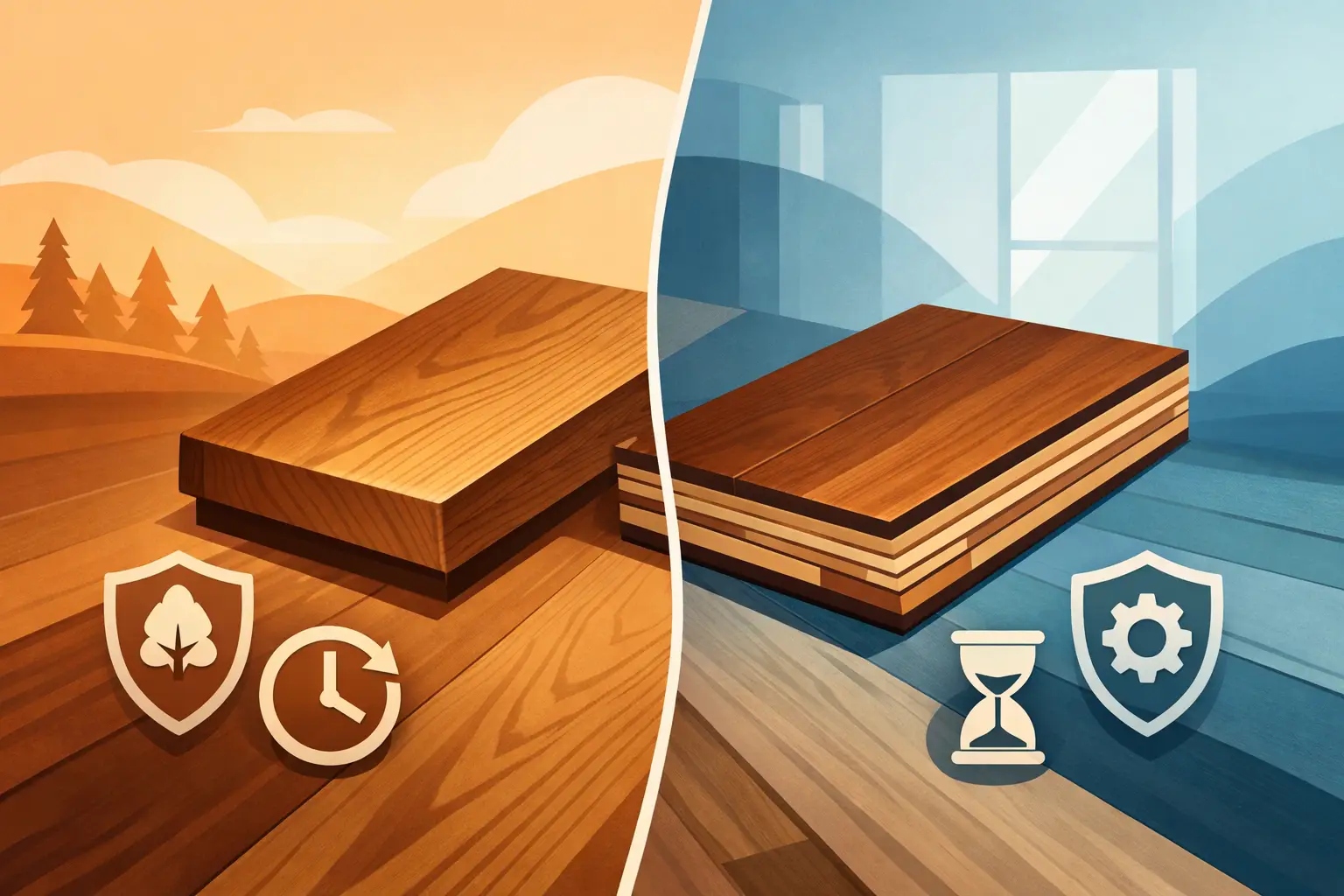
Solid hardwood is manufactured from a single piece of wood. From the finished surface to the bottom of the board, the flooring is the same hardwood species. Depending on the thickness and condition of the floor, this gives solid hardwood a major long-term advantage: it can often be sanded and refinished multiple times during its life.
Engineered hardwood is constructed differently. A layer of real hardwood is bonded to multiple layers underneath, typically made from plywood or another stable wood-based core. The visible surface is genuine hardwood, so a quality engineered floor can look virtually identical to a solid hardwood floor after installation.
Engineered hardwood should not be confused with laminate flooring. Laminate uses a manufactured decorative surface designed to resemble wood. Engineered hardwood has actual hardwood on the surface.
The layered construction of engineered flooring also makes it more dimensionally stable than solid hardwood. Wood naturally expands and contracts as environmental conditions change. Engineered construction helps reduce that movement, which can make it a better choice in certain installation environments.
Which Type of Hardwood Floor Lasts Longer?
When both floors are properly installed and maintained, solid and high-quality engineered hardwood can provide many years of service. However, solid hardwood generally has the advantage when we consider the floor's complete service life.
The reason is simple: solid hardwood provides considerably more wood that can potentially be sanded.
Scratches, worn finish, discoloration and many other surface problems do not necessarily mean a solid hardwood floor needs to be replaced. If enough usable hardwood remains above the tongue and groove, the damaged surface can often be sanded away and the floor refinished.
This restoration potential is one of the reasons hardwood floors can remain in homes for generations.
Can Engineered Hardwood Floors Be Refinished?
Sometimes.
This is where the thickness of the hardwood wear layer becomes extremely important. Engineered hardwood should never be considered refinishable simply because it has real wood on the surface.
Before sanding an engineered hardwood floor, we need to determine how much actual hardwood exists above the underlying core. As a general rule, we want approximately 3 mm or more of usable hardwood before considering a complete sanding and refinishing process. Even then, the condition of the floor, previous sanding and construction of the individual product must be evaluated.
Some higher-quality engineered hardwood products have a substantial wear layer and can be professionally refinished. Other engineered products have an extremely thin hardwood veneer. Attempting to aggressively sand one of these floors can go completely through the hardwood surface and expose the material underneath.
Once that happens, sanding cannot correct the problem. The affected flooring generally has to be replaced.
This is why National Floors evaluates engineered hardwood before agreeing to sand it. The question isn't simply whether the floor is engineered. The important question is whether there is enough hardwood remaining to safely perform the work.
Why Solid Hardwood Has an Advantage for Refinishing
Solid hardwood provides considerably more material to work with, but even solid flooring has limits.
The entire thickness of a solid hardwood board cannot be sanded away. The tongue-and-groove construction establishes a practical limit. As the floor is repeatedly sanded, the remaining wood above the tongue becomes thinner.
Before refinishing an older hardwood floor, we evaluate its condition and determine whether enough usable wood remains. Previous sanding, damaged boards, exposed fasteners and other conditions can influence whether another complete refinishing is appropriate.
When sufficient material remains, professional sanding can remove years of surface wear and expose fresh hardwood underneath. The floor can then remain natural or the appearance can be completely changed through hardwood floor staining before the protective finish is applied.
Where Engineered Hardwood Has the Advantage
Solid hardwood may have greater refinishing potential, but that does not automatically make it the correct flooring for every home.
Engineered hardwood can have a significant advantage when the flooring is being installed over concrete. Many Bay Area homes have concrete slab foundations, particularly on the ground floor. Installing traditional solid hardwood directly over concrete can create additional challenges that engineered flooring is often better designed to accommodate.
Depending on the manufacturer and the particular flooring product, engineered hardwood may be glued directly to a properly prepared concrete slab or installed using another approved system.
That flexibility can make engineered hardwood an excellent choice when homeowners want the appearance of genuine hardwood but the construction of the home is not ideal for traditional solid flooring.
Moisture Matters With Both Types of Hardwood
Engineered hardwood is more dimensionally stable than solid hardwood, but that does not make it waterproof.
Water is capable of damaging both flooring types.
Solid hardwood can absorb moisture and begin to expand. Depending on the severity and duration of the moisture exposure, boards may cup, crown, buckle or develop staining.
Engineered hardwood can experience many of the same problems. Excessive moisture can also affect the bond between its layers or the adhesive holding the flooring to the subfloor.
A small spill that is cleaned immediately is very different from a dishwasher leak, plumbing failure or moisture continuously entering through a concrete slab. When significant water damage occurs, the flooring and the source of the moisture should both be evaluated before deciding whether repair, refinishing or replacement is appropriate.
Installation Has a Major Effect on How Long Hardwood Lasts
Even excellent hardwood flooring can perform poorly if it is installed under the wrong conditions.
Subfloor condition, moisture, flatness, acclimation, expansion space and the installation method all matter. These details may disappear once the finished floor is installed, but they can determine how that floor behaves years later.
Solid hardwood is commonly nailed or stapled over an appropriate wood subfloor. Engineered flooring offers additional installation options, including glue-down and, with certain products, floating installation.
There is no single installation method that is best for every home. The flooring product and the conditions underneath it should determine the method rather than choosing a floor based solely on appearance.
Consider the Cost Over the Life of the Floor
The purchase price of hardwood flooring is only one part of its actual cost.
A quality solid hardwood floor may cost more initially, but its ability to be repaired, sanded, stained and refinished can dramatically extend its useful life. Instead of replacing the flooring when the finish becomes worn or the color becomes outdated, the existing hardwood may be restored.
Engineered hardwood can also provide excellent long-term value, particularly when its construction makes it better suited for the installation environment. However, the thickness of the wear layer should be considered when comparing engineered flooring products. A thicker wear layer can provide future restoration options that may not exist with a thin-veneer product.
For someone planning to remain in a home for many years, that distinction can become much more important than a small difference in the original purchase price.
Protecting Solid and Engineered Hardwood Floors
Regardless of which type of hardwood is installed, maintenance has a major influence on how long the floor remains attractive.
Dirt and grit should be removed regularly, spills should be cleaned promptly and furniture should have protective pads underneath areas that contact the floor. Excessive water should never be used when cleaning hardwood.
The protective finish is the first line of defense for the wood underneath. Allowing that finish to wear completely through exposes the hardwood itself to traffic, dirt and moisture.
Our hardwood floor care guide explains some of the basic steps homeowners can take to protect their floors and avoid unnecessary damage.
Solid or Engineered Hardwood: Which Should You Choose?
If the home has an appropriate wood subfloor and long-term refinishing potential is a priority, solid hardwood is difficult to beat. Its greatest advantage is the amount of usable hardwood available for future restoration.
If the flooring will be installed over concrete, floor height is limited or greater dimensional stability is desirable, engineered hardwood may be the better technical choice.
When considering engineered flooring, pay particular attention to the hardwood wear layer. Two engineered floors can look almost identical from the top while offering very different possibilities when refinishing becomes necessary years later.
The best floor is not necessarily solid or engineered. It is the floor that is appropriate for the building, installed correctly and capable of meeting the homeowner's expectations over its service life.
National Floors has decades of experience installing, repairing, sanding, staining and refinishing hardwood floors throughout the San Francisco Bay Area. Before replacing an existing hardwood floor—or choosing a new one—it is worth understanding exactly what you have, what your home can support and what restoration options may be available in the future.
