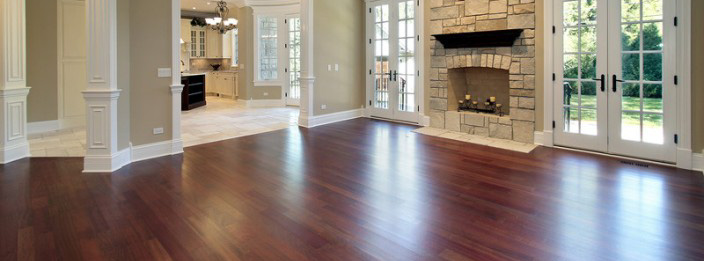

Water popping serves two primary purposes:
- It helps reduce the appearance of sanding marks and swirl marks.
- It opens the wood grain so the floor can absorb more stain, producing a deeper and richer color.
The darker the stain, the more important every step of the sanding and staining process becomes.
Dark Stain Exposes Everything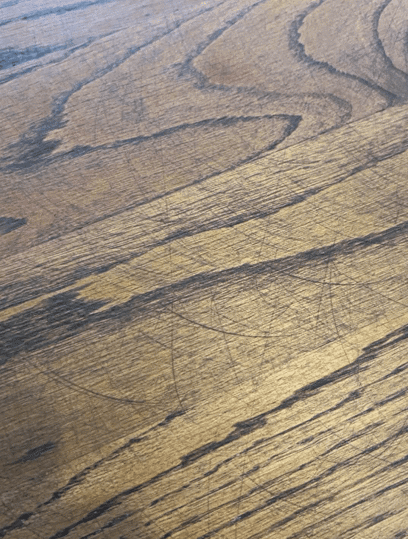
When a customer chooses a dark stain color, an experienced flooring contractor immediately understands that the margin for error has become much smaller.
Dark stain tends to highlight imperfections that may barely be noticeable on a natural or lighter-colored floor. Sanding marks, edger swirls, buffer marks and inconsistencies in the wood surface can suddenly become much more visible after the stain is applied. The picture on the right is a perfect example.
This means the sanding sequence, abrasive choice and final floor preparation must all be correct before staining begins.
If you'd like to understand why the sanding process requires so much experience, our article Why Hardwood Floor Refinishing Is Harder Than It Looks explains why professional refinishing involves considerably more than simply operating a sanding machine.
Sanding Grit Affects Stain Color
The final sanding grit has a direct effect on how much stain the hardwood will absorb.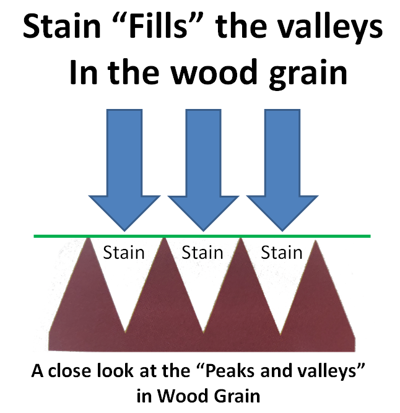
A rougher final sanding leaves the wood grain more open. Those larger openings allow more stain to penetrate the wood, which produces a darker appearance.
A very fine final sanding does the opposite. It smooths and closes the surface of the wood, reducing stain absorption and producing a lighter color.
This creates a difficult balancing act when a homeowner has selected a dark stain.
If the floor is sanded too fine, the finished color may be noticeably lighter than the stain sample the homeowner selected. If the floor is left more open to accept additional stain, sanding marks can become more visible.
Getting both the color and the sanding quality correct requires experience that only a seasoned flooring contractor possesses.
Why Sanding Marks Become a Problem
As rougher abrasives are used, the possibility of visible sanding or swirl marks increases.
Even when the sanding process has been performed correctly, dark stain can exaggerate extremely minor variations in the surface that would normally be invisible under a lighter finish.
This is one reason hardwood floors should "Always" be evaluated under normal lighting and normal viewing conditions rather than inches away from the surface with concentrated lighting.
Trying to eliminate every microscopic sanding mark by repeatedly sanding the floor finer can create another problem: the grain begins to close and the floor absorbs less stain.
At that point, the sanding may look perfect, but the stain may no longer produce the color the customer selected.
This Is Where Water Popping Comes In
Water popping provides another way to open the grain without relying solely on a rough final sanding.
A useful comparison is what happens to skin when it becomes wet. Moisture changes the surface. Hardwood behaves similarly. When the correct amount of moisture is applied, the wood fibers rise and the grain opens.
This creates a more receptive surface for darker stain colors.
The open grain allows the stain to penetrate more evenly and deeply, helping create the darker, richer appearance many homeowners are trying to achieve.
Water popping can also help reduce the visibility of very fine sanding and swirl marks by creating a more uniform surface before the stain is applied.
The Amount of Moisture Is Critical
This is not a process where more water produces better results.
Too little moisture may fail to open the grain evenly. Too much moisture can create an entirely different problem.
Hardwood reacts strongly to excessive moisture. Saturating the floor can cause the boards to swell, cup or distort. A procedure intended to improve the stain could suddenly create a much larger repair.
The amount of moisture applied must therefore be carefully controlled and distributed evenly across the entire floor.
Different Methods Can Be Used
Flooring contractors may use several methods to open the grain before staining, including:
- Water.
- Denatured alcohol.
- A controlled mixture of water and denatured alcohol.
- Flooring-specific products designed to raise and open the wood grain.
Regardless of the method, consistency is extremely important. Uneven application can create uneven stain absorption, which becomes particularly obvious with darker colors.
The Floor Must Be Completely Dry
After the floor has been water popped, patience becomes one of the most important parts of the process.
A floor can appear dry on the surface while still containing moisture within the raised grain. Applying stain too soon can interfere with stain absorption and create an uneven appearance.
Once the floor has dried properly, the grain remains raised and open. At that point, staining can begin.
The contractor will often notice considerably more resistance while applying stain because the raised grain creates a rougher surface. This is normal and is one of the indications that the grain has opened.
Stain Application Must Be Consistent
Once water popping has been completed, stain should be applied generously and consistently.
Uneven application can become extremely noticeable with dark colors. The objective is to give the open grain enough stain to absorb evenly throughout the floor.
After the stain has dried properly, the protective finishing process can begin. Multiple finish coats are then applied to protect both the stain and the hardwood beneath it.
If you're considering a significant color change, our article Can You Change the Color of Hardwood Floors Without Replacing Them? explains how the species of wood and refinishing process influence the final stain color.
Why Water Popping Is Not a Typical DIY Project
Water popping sounds simple: wet the floor, allow it to dry and apply stain.
In practice, it is anything but simple.
The sanding sequence must be correct. The floor must be uniformly prepared. The proper amount of moisture must be applied. The floor must dry completely, and the stain must then be applied consistently across a highly absorbent surface.
A mistake at any one of these stages can mean sanding the floor again and starting over.
For a homeowner attempting hardwood floor refinishing for the first time, dark staining combined with water popping is one of the most technically demanding situations they can encounter.
Water Popping Is About Control
Water popping is not necessary on every hardwood floor, and it should never be treated as an automatic step in every refinishing project.
It is a specialized technique used when the desired stain color, wood species and sanding conditions make additional grain opening beneficial.
When performed correctly, water popping can help create deeper stain penetration, more consistent color and a cleaner appearance on floors receiving dark stain.
When performed incorrectly, it can create staining problems—or even damage the hardwood itself.
Like many aspects of hardwood floor refinishing, the technique may sound simple. Knowing exactly when, why and how to use it is where professional experience makes the difference.
