
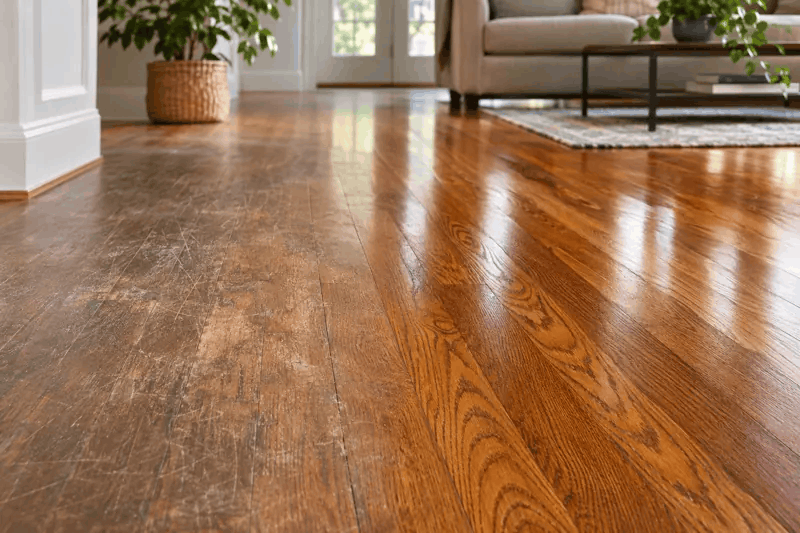
The important thing to understand is that hardwood floors should be refinished according to their condition, not simply their age. Foot traffic, pets, moisture, cleaning habits, and the quality of the protective finish all influence how frequently refinishing becomes necessary.
At National Floors, we encourage homeowners to evaluate the condition of their existing flooring before deciding whether it needs complete sanding, a maintenance coat, or minor repairs.
How Often Do Hardwood Floors Need Refinishing?
Although there is no universal refinishing schedule, the following guidelines can help homeowners understand what to expect.
- 1–3 years: Most newly finished floors require only routine cleaning and preventive maintenance.
- 4–6 years: Heavily used floors may begin showing surface scratches or reduced sheen. A screen and recoat may be worth considering if the existing finish remains intact.
- 7–10 years: Some floors develop noticeable traffic patterns, particularly in kitchens, hallways, and entrances. Their condition should determine whether maintenance or restoration is necessary.
- 10–20 years: Many solid hardwood floors eventually benefit from complete sanding and refinishing during this period.
- 20 years or longer: Well-maintained floors with durable finishes may continue performing beautifully without complete refinishing.
These are general guidelines, not deadlines. A floor that still looks beautiful and has an intact protective coating may not need any professional restoration.
It's the Finish That Wears Out First
Many homeowners assume that the hardwood itself is wearing away. Fortunately, that usually isn't the case.
The protective finish is designed to withstand everyday abuse from shoes, pets, furniture, dirt, and foot traffic. As long as that coating remains intact, the wood beneath it is largely protected.
Once the finish wears through, however, dirt and moisture can penetrate the exposed wood. This may lead to discoloration, staining, and more extensive damage.
The goal is to restore protection before ordinary surface wear becomes permanent wood damage.
Five Warning Signs Your Hardwood Floors Need Attention
Rather than relying on the age of your flooring, look for these common signs of deterioration.
1. Dull or Worn Traffic Areas
High-traffic areas often lose their original sheen before the rest of the floor. Kitchens, hallways, and entryways are particularly vulnerable.
If the existing finish is still intact, screening and recoating may restore its appearance without requiring complete sanding.
2. Deep Scratches and Gouges
Light scratches in the protective coating are common and may not justify complete refinishing.
However, scratches that penetrate the finish and expose the wood are more serious. Deep gouges may require sanding, filling, or individual board repairs.
3. Gray or Discolored Wood
Gray areas frequently indicate that the protective coating has deteriorated, allowing moisture and contamination to affect the wood.
This is particularly common near exterior doors and in heavily traveled areas.
Unlike ordinary surface dullness, discoloration within the wood generally cannot be corrected by simply applying another clear coat.
4. Water Stains and Dark Spots
Spills, plumbing leaks, pet accidents, and prolonged moisture exposure can produce dark stains in hardwood flooring.
Some stains can be removed through sanding, while deeper discoloration may require replacing individual boards.
Before refinishing, the source of moisture must be identified and corrected.
5. Worn or Missing Protective Finish
When the protective coating wears away, the exposed wood becomes vulnerable to moisture, dirt, and staining.
Visible bare wood, uneven finish coverage, or widespread deterioration are strong reasons to request a professional evaluation.
For additional information, read our article How to Tell If Your Hardwood Floors Need Refinishing.
Screen and Recoat vs. Complete Hardwood Floor Refinishing
Not every hardwood floor needs to be sanded down to bare wood. Understanding the difference between recoating and complete refinishing can save homeowners considerable expense.
Screen and Recoat
A screen and recoat involves lightly abrading the existing protective finish and applying a compatible new coating.
This procedure can improve the appearance of lightly worn floors while adding another layer of protection.
Screening and recoating may be appropriate when:
- The existing finish remains intact.
- Scratches are limited to the surface coating.
- The floor has lost some of its original sheen.
- There are no significant stains or areas of exposed wood.
- The existing finish is compatible with a new coating.
Screening does not remove deep scratches, eliminate stains within the wood, or change the floor's stain color.
Complete Sanding and Refinishing
Complete refinishing removes the existing finish and a controlled amount of the hardwood surface.
The flooring can then be stained, if desired, and protected with new finish coats.
Complete refinishing may be necessary when:
- The existing finish has worn through to bare wood.
- Deep scratches extend beneath the protective coating.
- Widespread discoloration or surface damage is present.
- The homeowner wants to change the floor's color.
- Previous coatings are deteriorating or unsuitable for recoating.
Some severe stains or damaged boards may still require repairs or replacement.
The best choice depends on the flooring's condition, construction, and previous treatments. A professional evaluation can help avoid unnecessary sanding.
Traffic Makes the Biggest Difference
No two homes experience the same amount of wear.
A formal living room may see very little foot traffic, while an entryway or kitchen may be used hundreds of times every day.
Homes with children, large dogs, or heavy daily activity naturally place greater demands on the finish than homes with lighter use.
Dirt and sand tracked indoors can act like sandpaper beneath shoes, gradually abrading the protective coating.
That's why two identical hardwood floors installed on the same day may need refinishing years apart.
What Else Determines How Long Hardwood Floor Finishes Last?
Quality and Type of Finish
Different hardwood floor finishes offer different levels of durability, appearance, and maintenance requirements.
Water-based polyurethane, oil-based polyurethane, and other professional finish systems have distinct characteristics.
Product quality, proper preparation, application methods, and adequate curing all contribute to the finish's long-term performance.
Wood Species and Hardness
Different hardwood species respond differently to impacts and everyday wear.
Harder woods generally resist denting better than softer species, although the protective finish still plays a major role in surface durability.
Even a hard wood species can develop scratches, stains, or worn traffic patterns when its finish deteriorates.
Sunlight and UV Exposure
Direct sunlight can gradually change the color of hardwood flooring and certain finishes.
Depending on the wood species, stain, and coating, floors may darken, lighten, or develop uneven coloration.
Window coverings and UV-filtering glass can help reduce excessive exposure.
Cleaning and Maintenance Habits
Improper cleaning products can damage or contaminate the existing finish.
Steam mops, excessive water, abrasive cleaners, and products that leave waxy or oily residues should generally be avoided unless specifically approved for the flooring.
Using products recommended for the existing finish helps preserve its protective qualities.
How Many Times Can Hardwood Floors Be Refinished?
One of the greatest advantages of real hardwood flooring is its ability to be restored rather than replaced.
However, the number of times a floor can be sanded depends on its construction and the amount of usable wood remaining.
Solid Hardwood Flooring
Traditional 3/4-inch solid hardwood flooring typically has enough material above the tongue-and-groove joint to accommodate several refinishing projects.
Under favorable conditions, many solid hardwood floors can be refinished approximately four to seven times over their lifetime.
The actual number depends on previous sanding, existing thickness, damage, and the amount of wood that must be removed.
Once the usable wood becomes too thin, further sanding may expose fasteners or compromise the flooring.
Engineered Hardwood Flooring
Engineered hardwood consists of a real wood surface bonded to a layered core.
Its refinishing potential depends primarily on the thickness of its real wood wear layer.
- Thin veneers: May not safely tolerate conventional sanding.
- Approximately 3 mm wear layers: May permit limited refinishing, depending on the product and remaining material.
- Approximately 4–6 mm wear layers: May accommodate multiple refinishing projects when sufficient material remains.
Some engineered hardwood products cannot be sanded at all.
Before refinishing engineered flooring, a qualified contractor should verify its construction and remaining wear layer.
Can Water-Damaged Hardwood Floors Be Refinished?
Water damage requires special attention because sanding does not correct the underlying moisture problem.
Excessive moisture can cause hardwood boards to cup, swell, stain, or separate.
Cupping occurs when the edges of individual boards rise above their centers. Crowning describes the opposite condition, where the centers are higher than the edges.
These conditions can result from moisture imbalances and should be investigated before sanding.
Never rush to sand a moisture-damaged floor. If the wood has not stabilized, sanding can create permanent unevenness when the boards return toward their original shape.
Some water-damaged floors can be successfully restored after the moisture problem is corrected. Others may require individual board replacement or more extensive repairs.
How to Extend the Life of Your Hardwood Floors
Simple maintenance habits can significantly reduce wear and postpone the need for professional refinishing.
- Keep dirt and grit off the floor. Sweep or vacuum regularly using hardwood-safe equipment.
- Use protective furniture pads. Install felt pads beneath chairs, tables, and frequently moved furniture.
- Protect entrances. Use appropriate mats to reduce the amount of abrasive debris tracked indoors.
- Clean with suitable products. Follow the flooring or finish manufacturer's cleaning recommendations.
- Keep pet nails trimmed. This helps minimize scratches and surface damage.
- Address spills promptly. Standing water can penetrate seams and damage the wood.
- Maintain stable indoor humidity. Avoid excessive moisture and extreme changes in environmental conditions.
- Consider recoating before the finish wears through. Timely maintenance can help protect the wood and delay complete refinishing.
These small steps won't eliminate the eventual need for refinishing, but they can substantially extend the useful life of the existing finish.
How Long Does Hardwood Floor Refinishing Take?
Many residential hardwood floor refinishing projects require approximately three to five days, depending on the size of the project, repairs, stain selection, and finish system.
Some projects take longer, particularly when extensive repairs or additional drying time are required.
It's also important to distinguish between drying and curing.
A floor may be ready for limited foot traffic before the finish has reached its full cure. Furniture replacement, area rugs, and normal household use should follow the manufacturer's recommendations.
Is It Better to Refinish or Replace Hardwood Floors?
When hardwood flooring remains structurally sound and has sufficient material for sanding, refinishing is often more economical than replacement.
Complete replacement may be necessary when boards are severely damaged, structurally compromised, or too thin to sand safely.
In many cases, however, individual damaged boards can be replaced while preserving the surrounding hardwood flooring.
This is one reason professional evaluation is valuable. Replacing an entire floor may be unnecessary when repairs and refinishing can restore its appearance.
Our article Can Wood Flooring Be Repaired or Refinished? explains additional factors that influence this decision.
Hardwood Floor Refinishing in the San Francisco Bay Area
Homes throughout the Bay Area contain hardwood floors of different ages, species, and construction methods.
Some older homes feature traditional solid oak flooring that has already been refinished several times. Others contain newer engineered hardwood with more limited sanding potential.
Sunlight, household activity, moisture conditions, and previous maintenance all influence how these floors age.
At National Floors, we evaluate the existing flooring before recommending the most appropriate restoration method.
Whether your hardwood floors need complete sanding and refinishing, staining, repairs, or a maintenance coat, our goal is to preserve as much of your existing flooring as practical.
Frequently Asked Questions
Can Hardwood Floors Last 20 Years Without Refinishing?
Yes. Well-maintained hardwood floors with durable protective finishes can remain in good condition for 20 years or longer without complete sanding. The condition of the finish is more important than the floor's age.
Can You Refinish Hardwood Floors Without Sanding?
Sometimes. A screen and recoat can renew an existing protective finish without sanding the flooring down to bare wood. However, the existing coating must be intact and compatible with the new finish.
Does Refinishing Remove Wood From the Floor?
Yes. Complete sanding removes a controlled amount of wood along with the existing finish. Experienced contractors aim to remove only the material necessary to restore the surface.
Can I Change the Color of My Hardwood Floors?
Generally, yes. Complete sanding can remove the existing stain and allow a different color to be applied. The final appearance depends on the wood species, its condition, and the selected stain.
Should I Refinish My Floors Before Selling My Home?
Refinishing may be worthwhile when visibly worn or damaged floors detract from a home's presentation. However, floors in good condition may only need professional cleaning or a maintenance coat. The potential benefit should be weighed against the project's cost.
What Happens If I Wait Too Long to Refinish?
When protective coatings wear away, exposed hardwood becomes more vulnerable to stains, moisture, and damage. Delaying necessary maintenance can increase restoration costs and sometimes require individual board replacement.
When in Doubt, Have Your Hardwood Floors Evaluated
There isn't a calendar that tells you exactly when it's time to refinish your hardwood floors.
Some floors may go decades before needing attention, while others show signs of wear much sooner.
Instead of asking, "How many years will my hardwood floor last?" a better question is, "What condition is the protective finish in today?"
A professional evaluation can help determine whether your floors need a maintenance coat, complete refinishing, or repairs.
At National Floors, we specialize in hardwood floor sanding, refinishing, staining, repairs, and restoration throughout the San Francisco Bay Area.
Homeowners choose National Floors for our competitive pricing, C-15 contractor license, licensed and insured services, no-deposit policy, and 2-year workmanship warranty on qualifying refinishing projects.
Bring back the beauty of your hardwood floors without unnecessary replacement.
Learn more about our Hardwood Floor Refinishing and Restoration Services, or contact National Floors to request a free estimate.
